CACCI joins UN CoNGO Regional Committee in Asia-Pacific in Bangkok
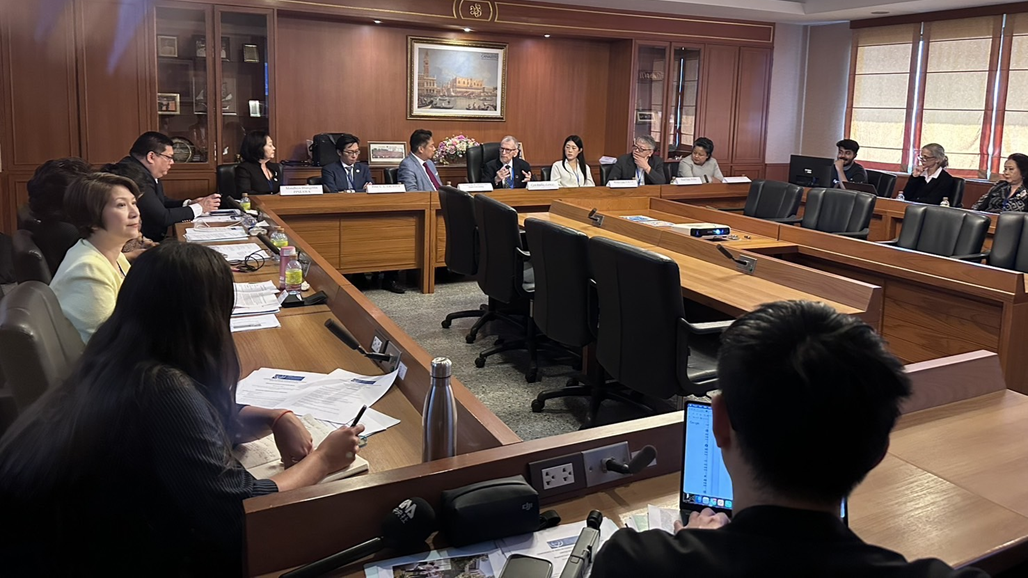
 The Conference of NGOs in Consultative Relationship with the United Nations (CoNGO) convened the annual meeting of its Regional Committee in Asia-Pacific (RCAP) from 25 to 26 April 2026 at Siam University, Bangkok. The meeting brought together 17 representatives from nine non-governmental organizations (NGOs), including the Confederation of Asia-Pacific Chambers of Commerce and Industry (CACCI), International Federation of Business and Professional Women (IFBPW), STUF United Fund-Asia Pacific Center, International Cooperation and Development Fund (ICDF), Pan-Pacific South East Asian Women’s Association (PPSEAWA), Plan International Thailand, Christian Conference of Asia (CCA), Siam University and the Taiwan Creative Economy Association (TECA).
Founded in 1948, CoNGO serves as one of the world’s largest associations of NGOs, facilitating both thematic and regional collaborations. RCAP was launched in 2017 with the aim of facilitating the participation of Asia-Pacific NGOs in all United Nations and CoNGO activities globally and regionally. CACCI has been a member of CoNGO since 1981.
The 2026 RCAP session was convened under the theme: "Transformative, Equitable, Innovative and Coordinated Actions for the Implementation of the 2030 Agenda for a Sustainable Future for All". The deliberations focused on a high-level review of five Sustainable Development Goals (SDGs 6, 7, 9, 11, and 17) in preparation for the July 2026 High-Level Political Forum (HLPF).
SDG 6: Ensuring sustainable water and sanitation management
SDG 7: Building affordable sustainable energy
SDG 9: Fostering Innovation for resilient, inclusive and sustainable industrialization
SDG 11: Making settlements inclusive, safe, resilient and sustainable
SDG 17: Strengthen implementation of global partnership for sustainable development
22 April 2026
Opening
Dr. Jomphong Mongkhonvanit, Vice President of Siam University, and Dr. Cyril Ritchie, First Vice President of CoNGO, delivered the opening remarks. Dr. Ritchie observed that global progress toward the SDGs is currently characterized by stagnation or regression, primarily due to deteriorating geopolitical conditions and protracted conflicts. He urged governments to expand the space for civil society participation in UN decision-making processes, emphasizing that multi-stakeholder collaboration with academia and civil society is indispensable for the realization of the 2030 Agenda.
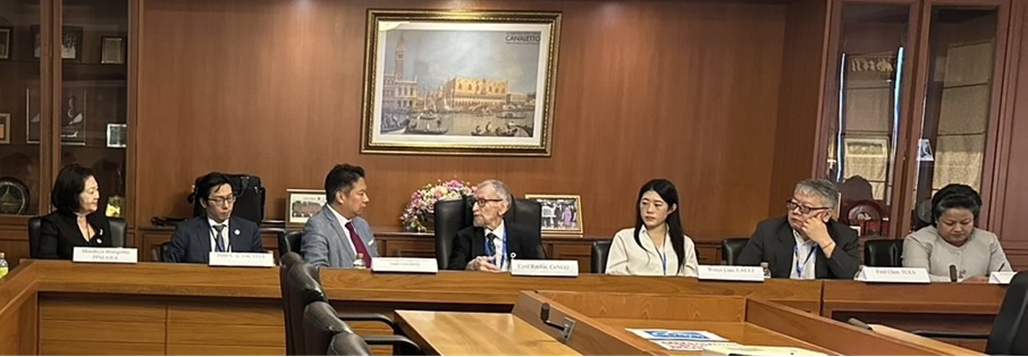
Special remarks delivered by Dr. Jomphong Mongkhonvanit, Vice President of Siam University (second from left), and Dr. Cyril Ritchie, First Vice President of CoNGO (second from right).
Presentations of Asia-Pacific NGOs/CSOs Actions on Implementing the SDGs
Ms. Wenju Liao, Senior Officer representing CACCI, outlined the organization’s efforts to support the 2030 Agenda for Sustainable Development by facilitating private sector engagement across more than 27 economies.
Within this framework, she highlighted the Asia-Pacific Green Alliance (APAC-GA), a collaborative initiative with the Singapore Manufacturing Federation. The project focuses on the standardization of sustainability reporting and provides MSMEs with technical resources to adapt to evolving regulatory frameworks in the Asia-Pacific region.
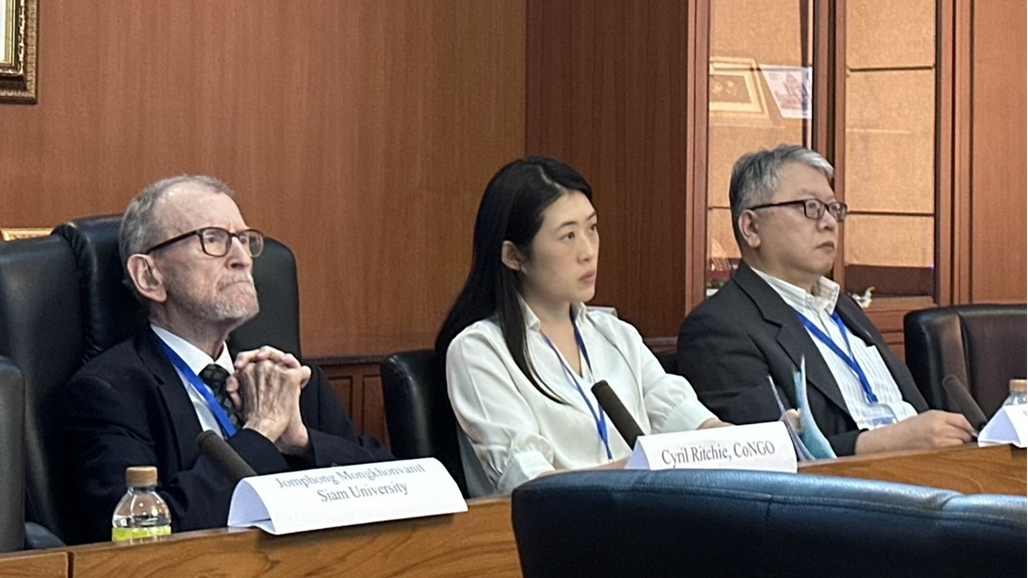
Ms. Wenju Liao, Senior Officer, CACCI (middle), presents SDG initiatives undertaken by CACCI for the 2030 Agenda for Sustainable Development.
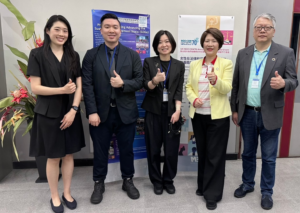
Delegates from CACCI, ICDF and TCEA during a networking session
Through various multistakeholder partnerships, CACCI has sought to address the alignment of digital regulations, provide support for entrepreneurship among women and youth, and contribute to joint studies on the challenges facing SMEs during the net-zero transition. Furthermore, the organization is working to share climate-aligned practices with domestic financial institutions and explore innovative climate finance instruments in local markets, such as the Philippines.
Ms. Liao noted that CACCI remains committed to fostering cooperation between global stakeholders and supporting a "just transition." She emphasized the importance of connecting global financial systems with real-economy opportunities to support regional competitiveness in a decarbonizing environment.
Reports of actions regarding the five aforementioned SDGs being implemented across the region were also shared by the following international organizations: PPSEAWA, TECA and BPW.
2 April 2026
Opening Remarks by CoNGO President
CoNGO President Mr. Peter Preziosi advocated for leadership rooted in humanity, transparency and collaboration to strengthen multilateralism. Amidst global challenges and UN financial constraints, he highlighted CoNGO’s "Convene, Communicate, Collaborate" framework as a vital mechanism for ensuring that civil society remains an essential partner in achieving the 2030 Agenda.
Panel Discussion on “Transformative, Equitable, Innovative and Coordinated Actions for the Implementation of the 2030 Agenda for a Sustainable Future for All”
During the panel, Dr. Peter C.L. Lin, President of the STUF United Fund-Asia Pacific Center, stated that NGOs must establish long-term partnerships to address the challenges of inadequate follow-up and a lack of leadership succession. He noted that such partnerships were vital for creating a lasting impact on society, business, and government.
Ms. Tseng Yun-Ching, Director, Research Development and Evaluation Department Taiwan ICDF, shared initiatives aimed at advancing the five reviewed Sustainable Development Goals (SDGs) through workshops on smart water management, agriculture, environmental protection, public health, ICT, SME development, and education.
Dr. Narudee Kiengsiri, Main Representative to UNESCAP for IFBPW, noted that roughly 14 percent of the SDGs were currently on track. She emphasized the need for transformative, systemic change and equitable design that prioritized the principle of "leaving no one behind." This included directing innovation toward the most significant gaps, fostering global coordination under the principle of "one voice, many hands" to align national development plans, and ensuring accountability through domestic resource mobilization, fair tax systems, and robust anti-corruption measures.
Dr. Ritchie underscored the essential need for cross-sector cooperation as NGOs face increasing funding constraints. He called for the strengthening of interconnections between the Asia-Pacific region and the NGO community, utilizing the RCAP annual event as a primary platform for regional integration. Furthermore, he noted that the 2027 SDG Summit would serve as a pivotal review of the 2030 Agenda, focusing on accelerating progress with only three years remaining before the deadline. The Summit would also serve as a platform for discussions on the post-2030 sustainable development framework.
The discussion concluded with a call for increased mutual support, the building of partnerships, and civil society advocacy in relation to ESCAP, the HLPF, the UN in general, and in particular to future UN Summits and Conferences.
RCAP Steering Committee Meeting
CACCI was formally appointed as a committee member for the 2026–2029 term. During a closed session of the RCAP Steering Committee, the committee identified several strategic priorities for the coming years, specifically focusing on enhancing the inclusion of youth and academia within the RCAP]