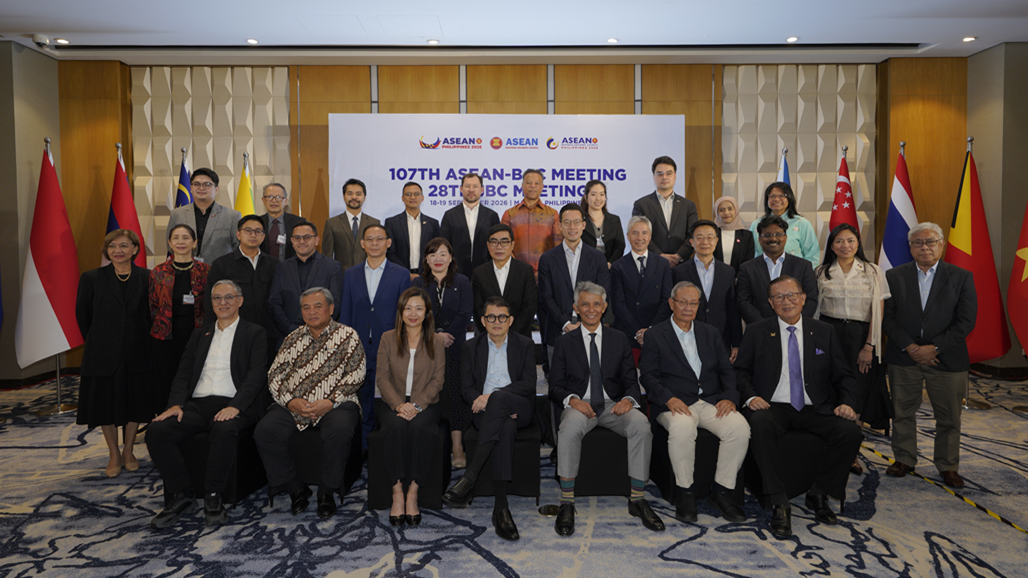
CACCI participates in ASEAN-BAC deliberations
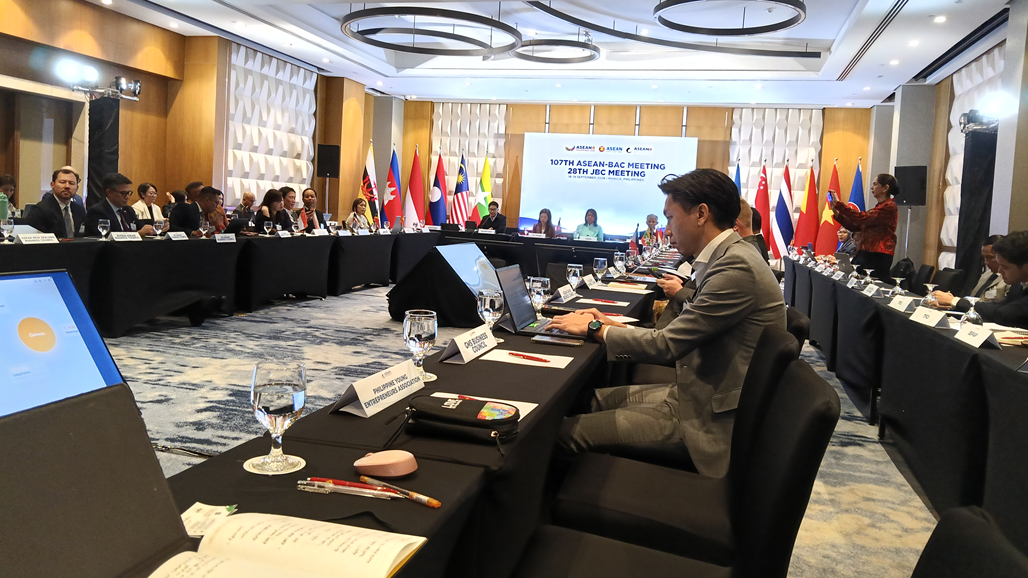
CACCI Deputy Director-General Mr. Amador Honrado Jr., in representation of CACCI and endorsed by CACCI President Peter McMullin AM, attended the 28th Meeting of the Joint Business Council (JBC) under the ASEAN Business Advisory Council (ASEAN-BAC) held on September 18, 2026 at the Citadines Bay City Hotel in Manila, Philippines.
CACCI is an Associate Member of the JBC and as such, had been invited to attend a series of regular meetings of the JBC held prior to the annual ASEAN Summit Meeting, which this year will be hosted by the Philippines in November 2026.
Attended by some 50 representatives of ASEAN BAC and JBC Members, the September 18 meeting of the JBC in Manila featured three Working Group (WG) Roundtables which focused discussions on the following issues, all of which are of current interest to CACCI and its members;
- Digital Innovation WG Roundtable
- Supply Chain and Economic Integration WG Roundtable
- Sustainability and Climate Finance WG Roundtable
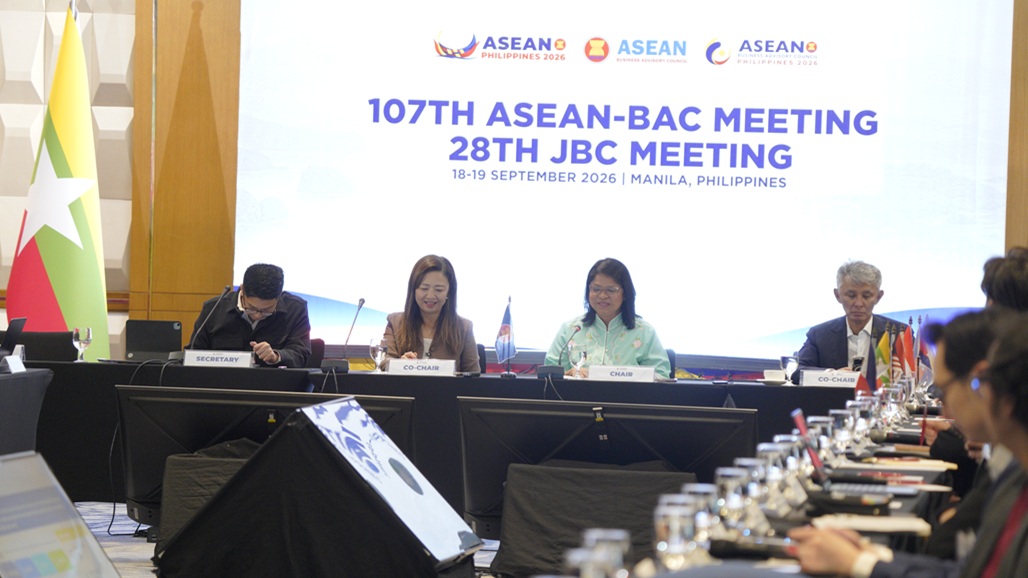
(1) Meeting of the Digital Innovation Working Group
Held from 08:30 AM to 10:00 AM, the Digital Innovation Working Group Meeting was presided by the Working Group Chair Ms. Josephine Romero, Ms. Josephine Romero, Senior Adviser, ASEAN-BAC Philippines.
In her Welcome Remarks, Ms. Romero cited the recent and upcoming work of the Working Group in promoting Digitalization and AI, particularly in the following areas:
- Institutionalizing Resilience – Through the new ASEAN Centre for AI Application and Industrial Resilience
- Digitizing the Supply Chain – By upgrading its 2017 Legacy Project (AMEN) into AMEN 2.0, a digital platform for MSMEs.
- Connecting the Region – By actively supporting the legacy projects of Thailand (Digital Trade Connect) and Malaysai (AI Initiatives), ensuring that ASEAN moves as one continuous bloc, rather than starting over every year.
ASEAN-BAC Executive Director Mr. Rifki Weno followed with a presentation on the Working Group’s Workplan, Priorities, and Chairman’s Agenda. Among others, Mr. Weno identified the eight desired outcomes of the ASEAN Digital Masterplan 2030, namely:
- Seamless, inclusive digital infrastructure
- Sustainable, intelligent digital government
- Empowered, safe, inclusive digital society
- Resilient, secured, trusted ecosystem
- Thriving innovation and start-ups
- Smart, digitally transformed industries
- Sustainable, green, AI-driven transformation
- Digital talent and future skills
Mr. Weno also pointed that the Masterplan asks of the private sector, namely:
- Innovate and invest in emerging technologies
- Build inclusive digital services and reach underserved markets through public-private partnerships
- Co-fund digital inclusion, upskilling and cybersecurity alongside government and regional efforts
- Supply Evidence through participation in ASEAN surveys and industry benchmarking of MSME digital adoption
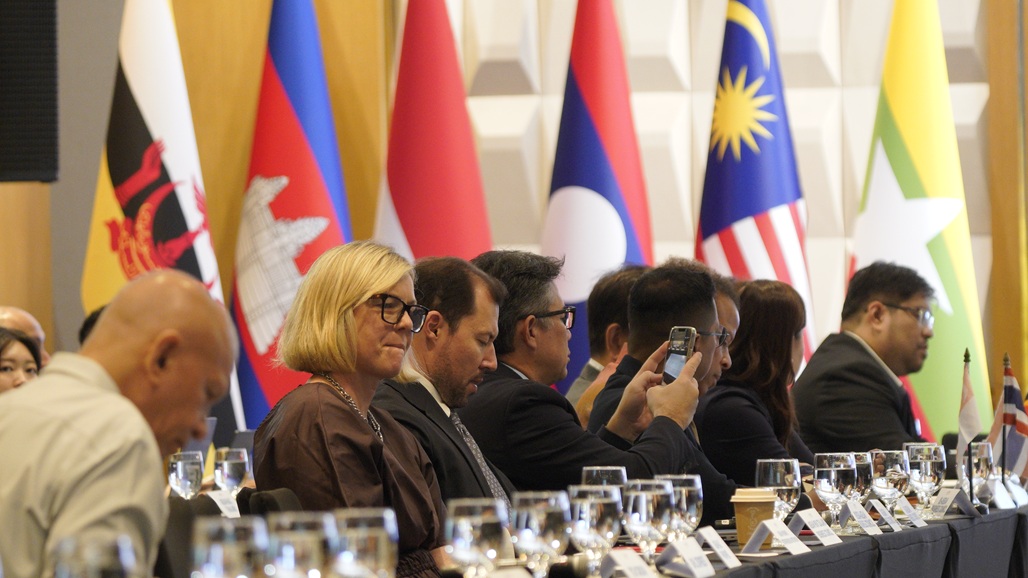
Some of the key areas raised during the Digital Innovation Working Group Meeting included the following:
- Trust and inclusion: Will firms be willing to adopt? Who gets the opportunity to participate?
- Readiness: Where is each SME starting from?
- Financing: Can it afford to take the next step?
- Skilling: Can it develop the capability to progress?
- Governance: Can it adopt safely without being overwhelmed by compliance?
- Depth of adoption: Is AI ultimately helping to create stronger and more competitive businesses?
(2) Meeting of the Working Group on Supply Chain and Economic Integration
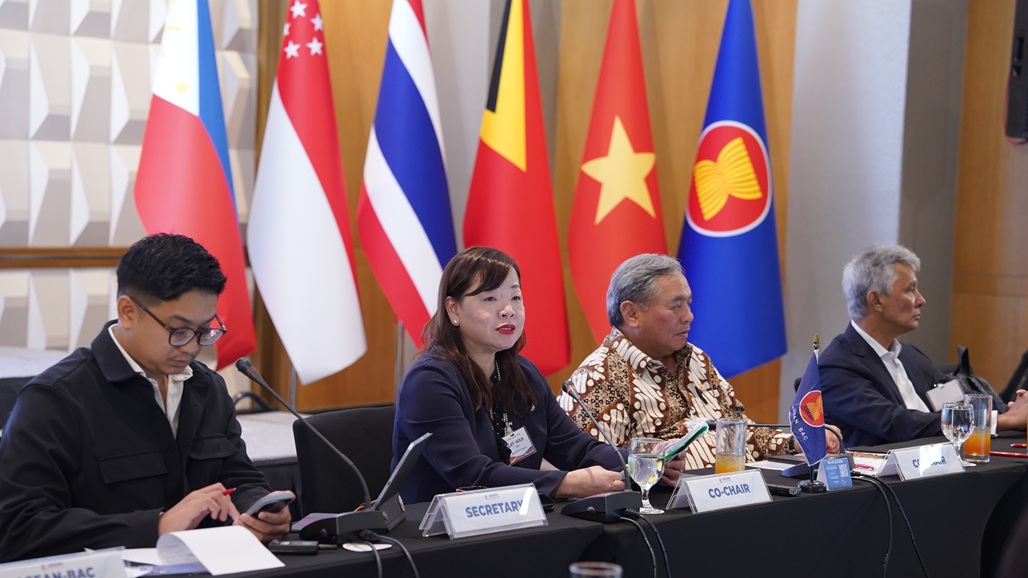
The Welcome Remarks was delivered by the outgoing WG Chaiman Mr. Michael Tan from the ASEAN-BAC Philippines, followed by the handover of the WG Chairmanship to Tan Sri Dato Soh Thian Lai from Malaysia.
The major items covered during the meeting covered the following:
- What Trade Facilitation Works in ASEAN and How We Can Amplify It: Regulatory Practice and Enforcement Capacity in ASEAN Supply Chains – The session pointed out that ASEAN has built a substantial body of regional trade and regulatory mechanisms, from ATIGA and its origin regime to mutual recognition arrangements and sectoral harmonisation directives. Some function as intended; others are honoured in certain member states and not in others, or go largely unused. This session took the utilisation view, drawing on the experience of a firm that applies these mechanisms across multiple ASEAN markets: which instruments deliver in practice, where they deliver, and why the conditions that make them work in one market so often fail to reproduce in the next.
- Driving Digital Trade Through Paperless and Interoperable Systems – The session noted that ASEAN has invested in digital trade infrastructure for over a decade. The discussion examined why paper persists in practice, and what would close the gap between systems that exist and systems that are used across borders.
- Reaction Round: Joint Business Councils – The session featured a short synthesis from the Chair, followed by reactions from the dialogue partner business councils on whether the diagnosis matches their members’ experience, and the single ask each would place before Economic Ministers, MSME participation and the uptake of simplification measures were taken up in this session.
(3) Meeting of the Working Group on Sustainability and Climate Finance
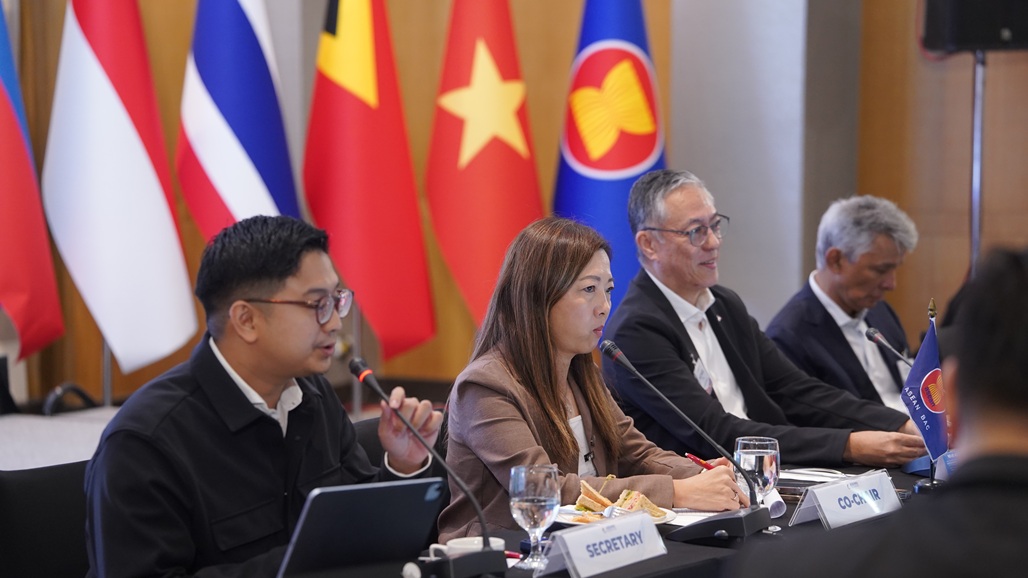
The meeting started with the Welcome Remarks delivered by the Co-Chairs of Working Group Mr. Bernardino Vega, ASEAN-BAC Indonesia and Ms. Lay Wah, ASEAN-BAC Singapore.
Discussions focused mainly on the Workplans and Priorities of the Working Group as presented by ASEAN-BAC Executive Director Mr. Rifki Weno. Among others, Mr. Weno elaborated on the purpose and mandate of the Working Group, noting that:
- It is the standing ASEAN-BAC platform for translating the Strategic Measures relevant to the green transition, sustainable finance and energy into evidence-based private-sector inputs.
- It convenes industry captains from each ASEAN Member State and global companies active in the region, and channels their inputs to the relevant Sectoral Bodies and, annually, to the ASEAN Economic Ministers (AEM) and ASEAN Leaders through a policy paper.
- It is custodian of ASEAN-BAC's existing sustainability instruments — including the Carbon Centre of Excellence (a B20 Indonesia 2022 legacy, relayed through ASEAN-BAC 2023), the ASEAN Net Zero Hub and its emerging Alliance, the ASEAN Common Carbon Framework (ACCF), and alignment of ASEAN-BAC inputs with the ASEAN Blue Economy Framework (2023).
During the meeting, CACCI Deputy Director-General Mr. Amador Honrado made an intervention, by first briefly introducing CACCI and its activities, informing the attendees of the following:
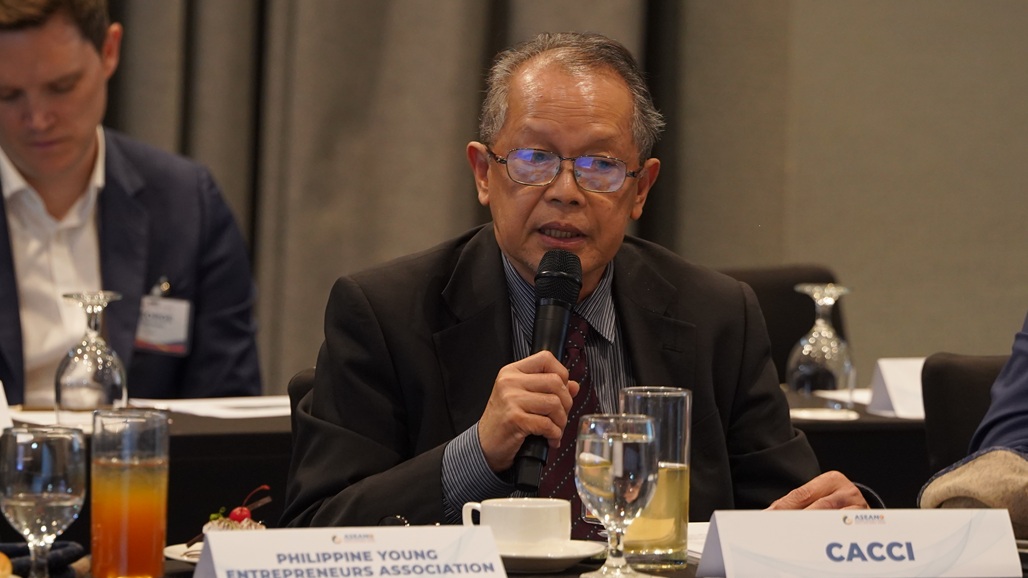
(a) The launching in late November 2024 of the Asia Pacific Green Alliance (APGA) in response to the fragmented sustainability landscape that countries worldwide currently navigate. Many countries encounter diverse standards, regulations, and approaches to sustainability. This diversity, while reflective of local priorities and contexts, creates a significant challenge, especially for small and medium enterprises (SMEs). The vision and mission of APGA are as follows: (i) Vision: To unify sustainability reporting across the Asia Pacific economies with a standard that ensures transparency and accountability, and amplifies the region's global influence; and (ii) Mission: To empower companies with simplified actionable sustainability tools while advocating Asia-Pacific priorities on the global stage.
(b) Prior to the official launching of the APAC-GA in November 2024, CACCI President Mr. Peter McMullin commissioned a study aimed at getting a better understanding of the needs and challenges faced by SMEs in transitioning their businesses or organizations toward net-zero goals. Conducted through interviews, the study also sought to gather insights and suggestions on how CACCI can provide effective support in this transition.
 (c) CACCI is a member of CoNGO, an international organization of NGOs granted consultive status with the United Nations. CACCI is also a member of the Steering Committee of the Asia-Pacific Regional Committee of CoNGO that meets every year to discuss the activities of CoNGO members aimed at helping the implementation of the Sustainable Development Goals of the United Nations.
(d) CACCI has been coordinating with the ICC World Chambers Federation in planning the holding of joint webinars on sustainability. This includes a joint webinar on “Making Sense of Sustainability Requirements for SMEs in Asia-Pacific to be held on 2 October 2026, aimed at offering practical insights into navigating sustainability expectations in international trade and export markets, while helping SMEs better understand how these requirements may affect their business relationships, access to markets, and financing opportunities.
(e) The Asian Bankers Association (ABA), one of the Product and Service Councils established under the CACCI umbrella, has been organizing webinars aimed at providing member banks and other ABA Knowledge Partners to share their experience and best practices on Green Financing from which other member banks, particularly those from less developed countries, can learn from the presentations and help them and their clients, mainly the SMEs, in their ESG transition journey
Following the meeting, Mr. Honrado was approached by some members of the ASEAN-BAC and of the JBCs to express their interest in the information he shared during the discussions, particularly on the APGA Initiative of CACCI and the survey aimed at getting a better understanding of the needs and challenges faced by SMEs in transitioning their businesses or organizations toward net-zero goals. Mr. Honrado offered to provide them more information on CACCI, invited them to the 40th CACCI Conference to be hosted by the Philippine CCI on 4-5 November 2026 in Manila, and explored with them the possibility of participation on the follow-up survey on SMEs’ transition journey to net-zero goals.