Informative webinar on ICC WCF Chamber Benchmarking Tool held on 23 July 2026
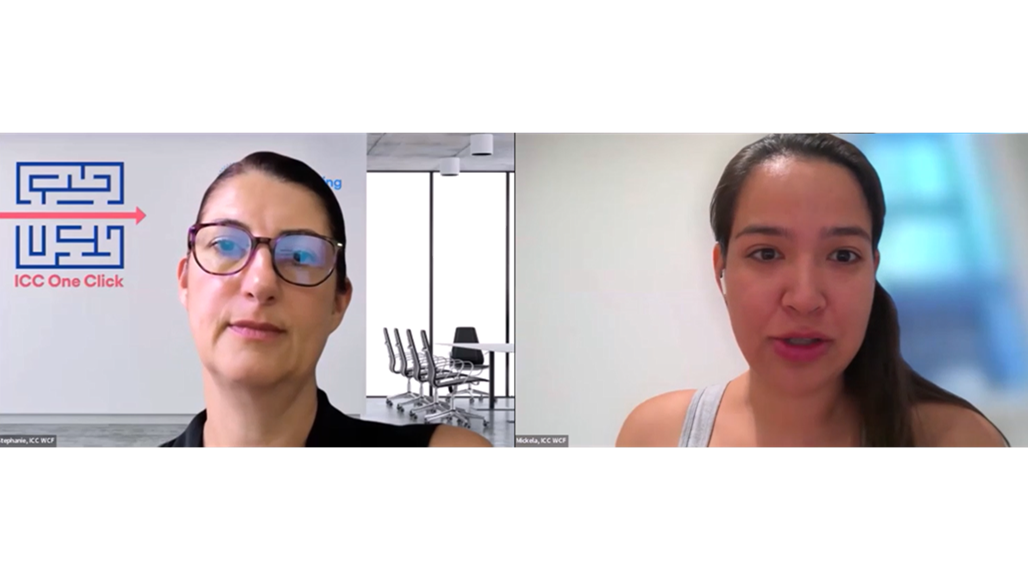
The Confederation of Asia-Pacific Chambers of Commerce and Industry (CACCI) and ICC WCF (International Chamber of Commerce and World Chambers Federation) held an informative webinar on ICC WCF Chamber Benchmarking Tool (CBT) on 23 July 2026.
Here is the summary of the presentations and Q&A discussion.
(1) Opening Remarks by Dr. Darson Chiu, Director General, CACCI
Dr. Darson Chiu welcomed chamber leaders and executives from across the Asia-Pacific region to the webinar jointly organized by the Confederation of Asia-Pacific Chambers of Commerce and Industry (CACCI) and the ICC World Chambers Federation (ICC WCF) . He noted that chambers face increasing expectations to deliver greater value, respond to rapid changes, and continuously improve their services. Rather than developing every solution independently, chambers can benefit from international best practices and the experiences of successful peers. He explained that the ICC Chamber Benchmarking Tool (CBT) enables chambers to assess their current performance, identify areas for improvement, and discover practical ideas for strengthening their operations and member services. Dr. Chiu thanked the ICC WCF for its collaboration and encouraged participants to explore the platform and engage actively with the speakers.
(2) Presentation by Stephanie Vieilledent, Head of WCF Global Services, ICC WCF
Stephanie Vieilledent introduced the CBT as a digital platform developed by the ICC WCF and Dubai Chambers. Launched at the 14th World Chambers Congress held in Melbourne on 2-4 September 2025, the CBT helps chambers assess performance, compare themselves with peers, and identify opportunities for continuous improvement.
The CBT responds to common questions from chambers, including how they compare with other organizations, where their strengths lie, what areas require improvement, and what leading chambers are doing differently. Through a structured assessment, users receive personalized insights into their organizational maturity and development needs.
The assessment covers two principal dimensions. The first is operational excellence, including governance, strategy, people management, organizational practices, and service delivery. This section is mandatory and must be completed in full.
The second dimension examines the roles and responsibilities performed by chambers, including business support, advocacy, economic development, and community services. Since chambers differ in their mandates, each participant selects between two and seven categories relevant to its activities.
Each chamber must create an account, complete its organizational profile, and appoint one Chamber Steward. This individual manages the account, enters information, completes the assessment, and uploads supporting evidence. Additional chamber employees may receive view-only access as chamber staff.
Stephanie advised chambers to collect relevant documents before beginning the assessment. Preparing evidence in advance helps ensure accurate responses and makes the process more efficient. Users can save their progress, return to incomplete sections, and review their information before submission.
Most assessment questions are completed through drop-down menus rather than lengthy written responses. After submission, ICC WCF checks whether all required information has been entered correctly. The review does not judge or modify the chamber’s answers, although incomplete submissions may be returned for revision.
Once approved, the platform generates a customized benchmarking dashboard. Chambers can review scores across different categories, identify performance gaps, and compare themselves with relevant regional or global groups. The tool is intended to support learning and improvement rather than produce rankings.
A major feature is the library of chamber case studies and best practices. Based on assessment results, the platform recommends examples related to the chamber’s needs, including member services, advocacy, market intelligence, digital transformation, partnerships, and other successful initiatives.
The purpose is not to copy another chamber’s programme directly, but to draw inspiration from proven approaches and adapt them to local circumstances. Case studies also include contact details, allowing chambers to exchange experiences and explore cooperation. Strong-performing chambers may be invited to submit their own cases.
During the demonstration, participants were shown the login page, profile, assessment sections, application status, benchmarking dashboard, gap analysis, recommendations, and best-practice library. Stephanie concluded by encouraging chambers to activate their accounts, gather evidence, complete the assessment, and use the resulting insights. She confirmed that the CBT is included in ICC chamber membership and becomes more valuable as participation increases.
(3) Question-and-Answer Session
During the question-and-answer session, Stephanie and her colleague Mickela Vucetich clarified several practical aspects of the CBT. Regarding account management, Stephanie explained that each chamber must appoint one Chamber Steward. This may be the chief executive officer, a senior manager, or another staff member with access to the information and documents required to complete the assessment.
Stephanie confirmed that the CBT is free of charge for ICC member chambers because access is included as part of their membership.
The speakers explained that the platform compares data submitted through completed chamber assessments. It does not measure performance against unrelated industry standards. Its value increases as more chambers register and contribute data.
Chambers can view comparisons on both regional and global bases. However, Stephanie emphasized that the CBT is not intended to create rankings. Its purpose is to support self-assessment, learning, and organizational improvement.
Users do not select a particular chamber or benchmarking partner. The platform automatically performs comparisons using the assessment data available from participating chambers.
On networking, Mickela explained that chambers submitting case studies may include the contact details of the person responsible for the initiative. This allows users to exchange information and explore cooperation, although Stephanie clarified that the platform does not include an internal chat function.
Stephanie added that the platform itself is easy to learn because it relies mainly on drop-down menus. Most of the work involves gathering evidence and completing the assessment accurately. Supporting materials may include reports, dashboards, surveys, programme records, policy documents, partnership agreements, evaluations, and secondary data from relevant organizations.
The session concluded with an invitation to register, while CACCI confirmed that the presentation materials and webinar recording would be distributed afterward.
A copy of the presentations was distributed to all the participants.
A video recording of the webinar can be viewed at the CACCI YouTube.