CACCI joins ASEAN Conference in Singapore
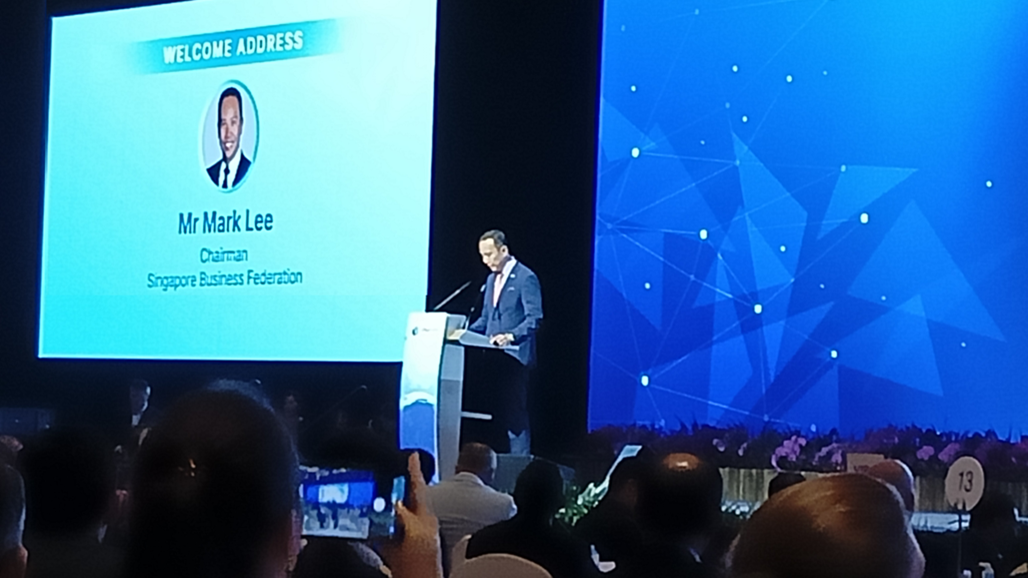
The CACCI delegation stayed for another day to attend the ASEAN Conference hosted by Singapore Business Federation (SBF) on 31 July 2026. Launched in 2015, the ASEAN Conference is an annual signature event, organised by SBF and jointly supported by United Overseas Bank Limited, Rajah & Tann LLP and RSM. The ASEAN Conference brings together key decision makers from both the private and public sectors predominantly in ASEAN to examine various business and investment related topics with the vision to help the regional business communities tackle challenges, explore opportunities and concretise deals in ASEAN and beyond.
Celebrating its 10th edition, the ASEAN Conference 2026 aimed to continue uniting and discovering how nations can collaborate in building a more resilient ASEAN in an increasingly volatile world. Centered on the theme of ‘ASEAN’s Future in a Fractured World’, the conference highlighted how ASEAN can strengthen its unity, resilience, and strategic leadership while navigating global challenges and its complexities.
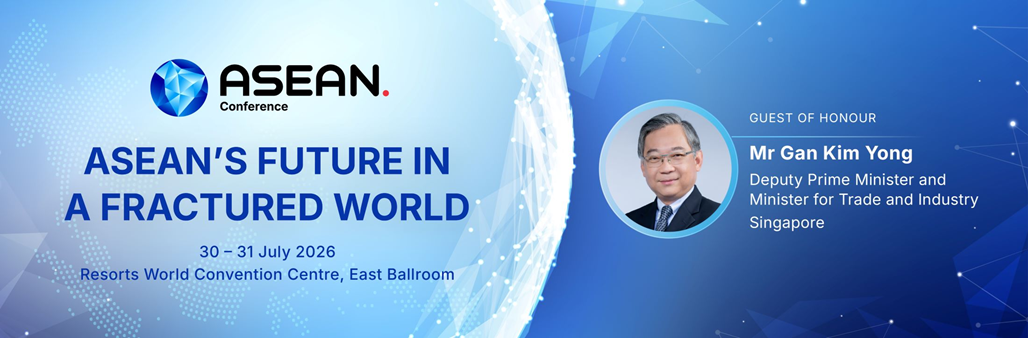
SBF noted that in a world marked by uncertainty, ASEAN has the opportunity and the responsibility to stand as a pillar of stability and resilience. By strengthening our energy security, empowering our people, deepening supply-chain connectivity, and reinforcing financial resilience, ASEAN members are not merely responding to global challenges; they are shaping for a future that is sustainable and shared.
Through high-level discussions, thought leadership, and dialogues, the ASEAN Conference 2026 demonstrates how collaboration and strategic foresight can counterbalance the fractures and instabilities on the global landscape and ascertain ASEAN’s central role as a strategic connector for trade, innovation and investment.
(1) Welcome Remarks
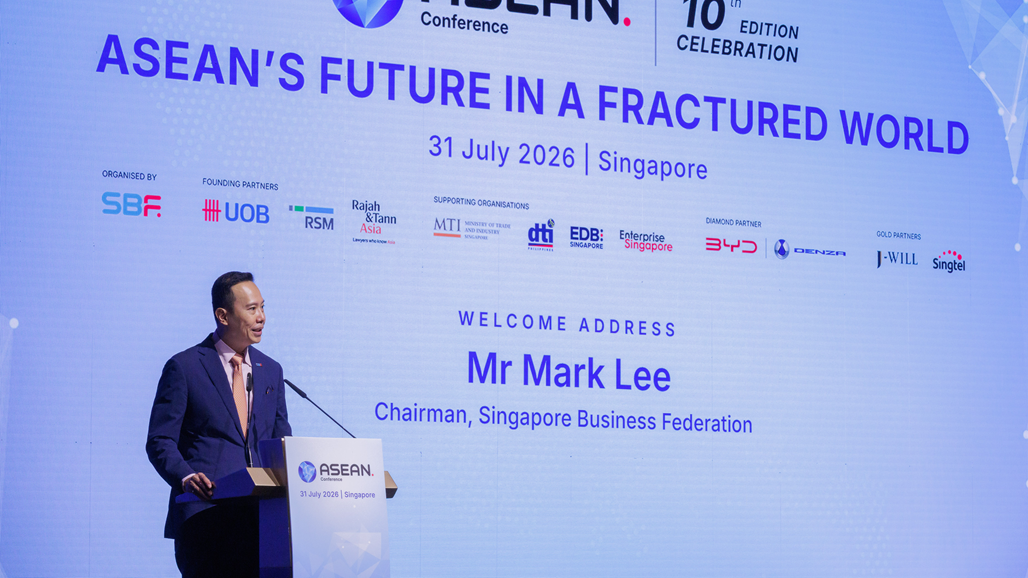
In his Welcome Remarks, Mr. Mark Lee, Chairman of Singapore Business Federation, said that the ASEAN Conference – now on its tenth year - celebrated ASEAN’s growing resilience and immense potential, highlighting how stronger regional collaboration, digital and green transformation, AI-driven innovation, and investment in future leaders can unlock new opportunities and build a more connected, competitive, and prosperous ASEAN.
(2) Opening Address
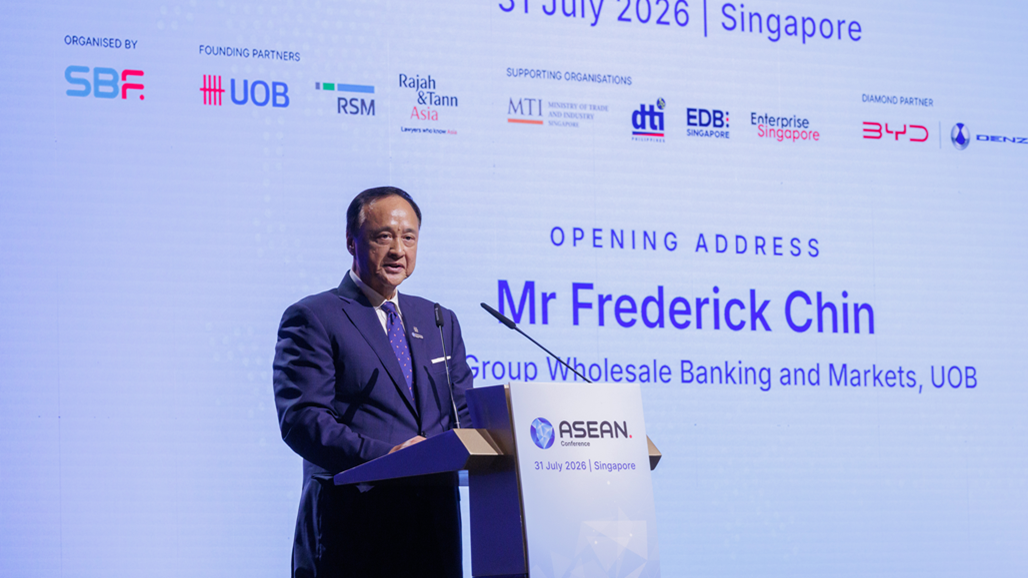
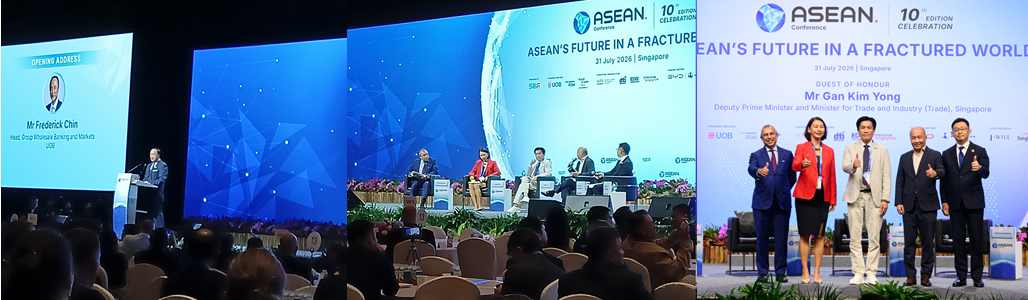
Highlighting UOB’s long-standing commitment to ASEAN’s growth, Mr Frederick Chin, Head of Group Wholesale Banking and Markets at United Overseas Bank (UOB), emphasized that as trust, connectivity, talent, and innovation become increasingly important in a fragmented world, ASEAN is well-positioned to emerge as a resilient and influential hub for trade, investment, and sustainable economic growth.
(3) Ministerial Dialogue: ASEAN's Future in the fractured world
The dialogue between Deputy Prime Minister and Minister for Trade and Industry (Trade), Mr Gan Kim Yong and Ms Ma. Cristina A. Roque, moderated by Kok Ping Soon, CEO of the Singapore Business Federation, reaffirmed that collective resilience requires deeper integration — milestones like the Digital Economy Framework Agreement (DEFA), regional AI frameworks, Power Grid integration, and green accords require the business community to actively co-create and execute regional growth.
The Philippines, as the ASEAN Chair in 2026, has a pivotal role in advancing ASEAN’s stability and unity. By strengthening regional security frameworks and reinforce peace with careful navigation, ASEAN can safeguard stability for all members, including strategic hubs like Singapore. Through economic integration, resilient supply chains, and digital transformation, ASEAN can transform fragmentation into an opportunity for cohesion, shared prosperity and innovation within ASEAN and in fostering a more unified and adaptive regional community as a whole.
(4) Panel Discussion “Boardroom Strategies in a Fractured World: Investing, Operating and Winning in ASEAN”
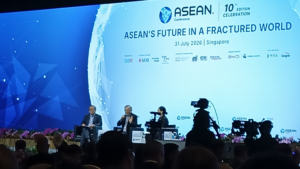 The panelists agreed that Intensifying geopolitical rivalry, rising economic nationalism, and widening regulatory divergence are materially reshaping the operating landscape for businesses across ASEAN. Capital allocation, supply chain architecture, and compliance frameworks are no longer guided solely by cost efficiency, competitiveness, and market potential; they are increasingly calibrated against de-risking imperatives, strategic government signaling, national security considerations, and the realignment of global economic blocs.
Discussion addressed the questions: Does ASEAN serve as a strategic growth market or a hedge in a shifting global landscape? In the present times, companies confront instability, policy uncertainty, and political pressures. How do companies balance regulatory compliance with strategic positioning while protecting shareholder value?
The discussion also explored how ASEAN is perceived externally - is it a cohesive economic bloc or as a fragmented set of national markets. Underpinning these issues are the practical realities businesses are addressing behind closed doors, including contingency planning for sanctions, export controls, and abrupt policy shifts, and what must be strengthened for ASEAN to remain credible, unified, and resilient in an era of bloc-based geopolitics.
(5) UOB Gateway to ASEAN Showcase: AI Infrastructure & Growth in APAC: Building the Next Digital Backbone for ASEAN
The panel discussion observed that the Asia-Pacific region is set to experience significant growth in AI and GenAI investments, powering next-generation digital capacity. Yet, for many businesses, the harder question is no longer whether to adopt AI, but how to institutionalize it at scale.
The session featured a focused conversation examining what it takes to build the infrastructure, governance, and ecosystems that turn AI ambition into competitive advantage across ASEAN and the wider Asia-Pacific region.
(6) Fireside Chat “Building an Integrated and Resilient ASEAN Energy Market”
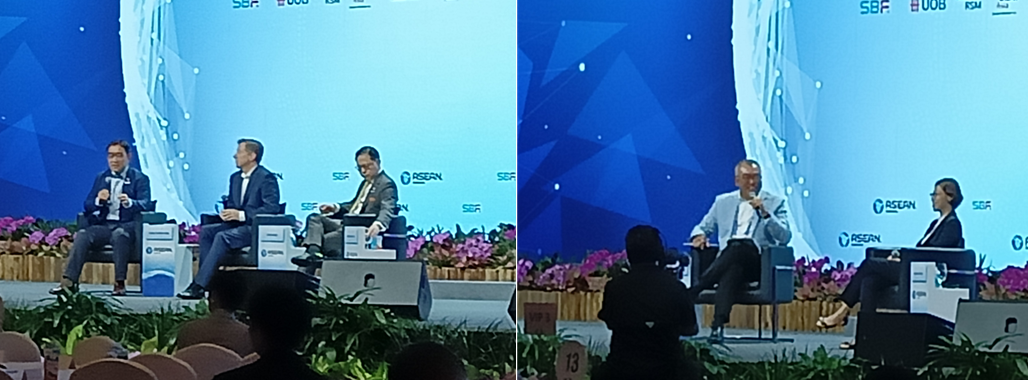
The panelists agreed that ASEAN’s energy sector stands at a pivotal moment where regulatory preparedness varies widely across the region. While some ASEAN countries advance in renewables, storage, and smart grids, there are other member states facing regulatory, financial, and infrastructure constraints that limit scalability and slow progress toward an integrated, resilient energy system.
The discussion explored how regional cooperation, cross-border energy trade, and shared infrastructure can strengthen energy security, improve efficiency, and make ASEAN more resilient to geopolitical shocks. A key focus of the dialogue was on the transition to modern energy systems and the challenges that arise from uneven development among member states.
The panel highlighted opportunities for knowledge transfer and adoption of best practices from leading ASEAN nations, enabling less advanced countries to catch up more quickly and improving the overall competitiveness of the region.
The discussion also considered how businesses and governments can accelerate collaboration, build trust, and foster innovation - positioning ASEAN not just as an energy consumer, but as a hub for sustainable energy development, technology, and regional leadership.
(7) Concurrent Market Breakout Sessions
Breakout sessions were conducted that looked at market opportunities in Indonesia, Malaysia, Thailand, and Vietnam.
Indonesia Market Breakout
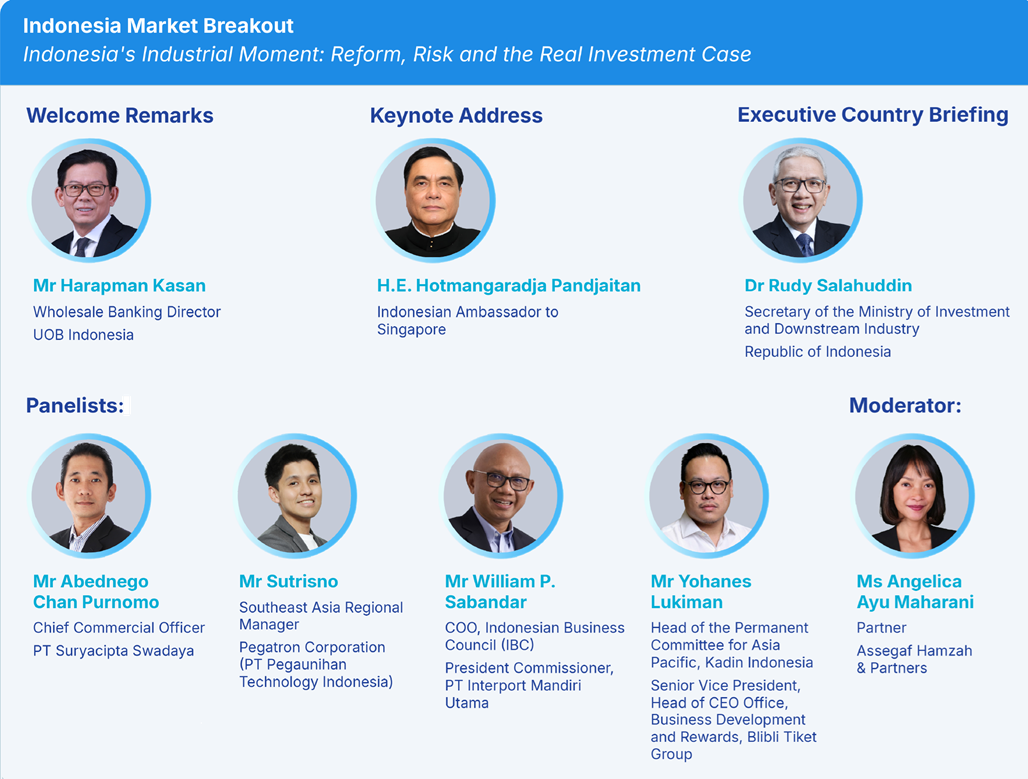
Invited speakers pointed out that the Batam–Bintan–Karimun (BBK) corridor is emerging as a strategic hub for investment, manufacturing, and logistics in Indonesia, supporting the nation’s ambition for 8% growth. Leveraging its proximity to Singapore and linkages with the Java–Sumatra SEZs, BBK illustrates how cross-border collaboration can create seamless industrial ecosystems.
The session explored how complementary Indonesia–Singapore and Malaysia Singapore economic corridors can strengthen regional supply chains, optimise manufacturing scale, and enhance ASEAN’s competitiveness — demonstrating how coordinated SEZ development can position the region as a resilient, integrated hub in a fractured global economy.
The panelists agreed that leveraging digital financing to turn transaction data into credit can unlock greater SME participation in supply chains, while strong human capital, rising investor confidence, and Indonesia’s strategic ASEAN position continue to strengthen its long-term growth prospects
Malaysia Market Breakout
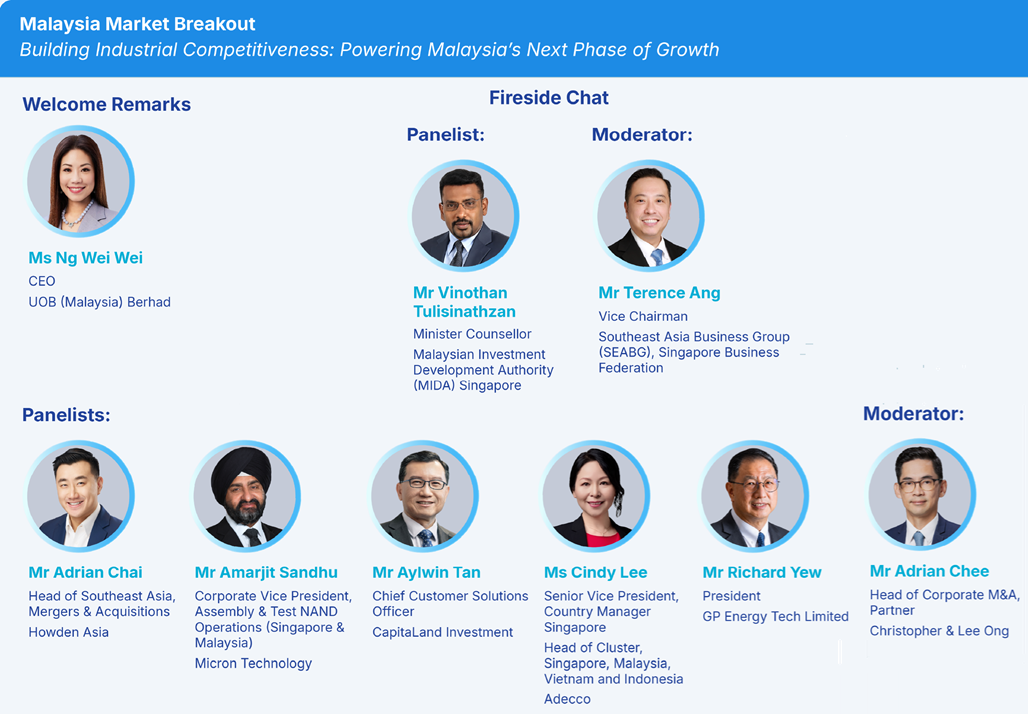
Discussion noted that as global semiconductor supply chains realign amid geopolitical fragmentation, Malaysia and Singapore are strengthening an integrated cross-border ecosystem that enhances ASEAN’s strategic relevance. With Singapore largely serving as the innovation and headquarters hub and Malaysia providing manufacturing scale, talent, and operational support, companies are creating integrated value chains that span across borders.
As international brands source components within the region and assemble products locally, this collaborative approach highlights how regional integration, complementary capabilities, and coordinated infrastructure can position ASEAN as a strategic hub for global business and competitiveness in a fractured world.
Malaysia’s competitiveness is increasingly driven by its strong industrial ecosystem, high-value talent, robust local supply chains, and industry partnerships that support innovation, advanced manufacturing, and long-term investment growth.
Thailand Market Breakout
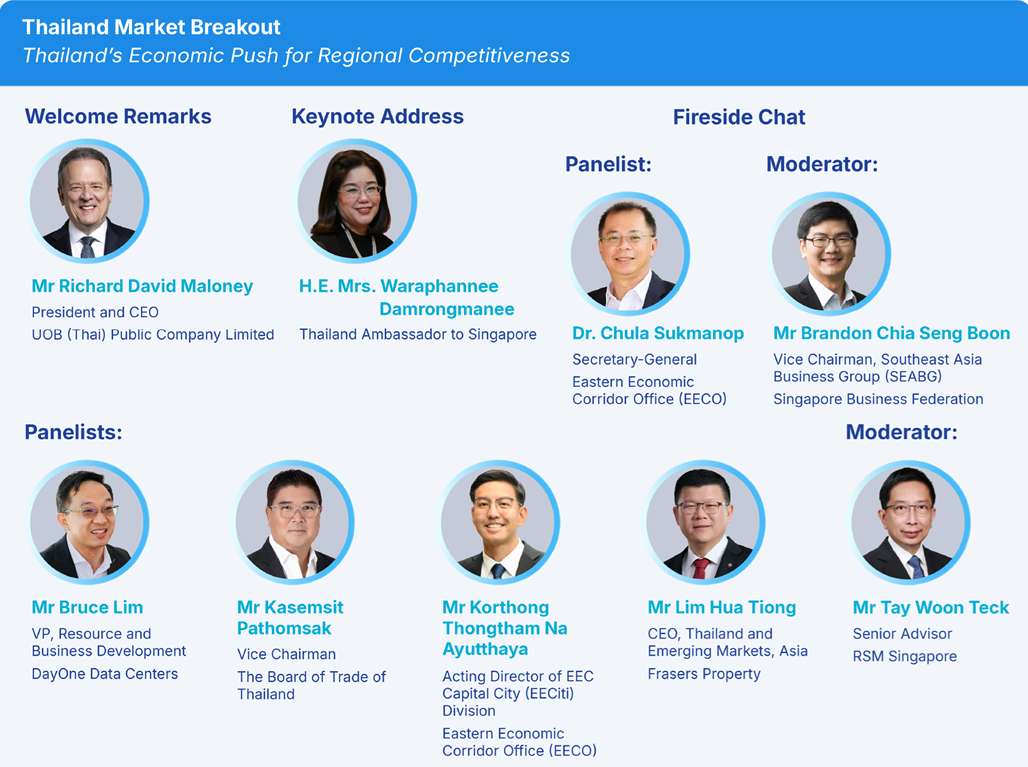
The session panelists pointed out that Thailand remains a strategic growth market within ASEAN, but FDI inflows face pressure due to stability and cross-border challenges. Thailand is strengthening its position as a regional hub by leveraging its strategic Greater Mekong connectivity, accelerating energy and digital infrastructure development, enhancing ease of doing business, and fostering sustainable, investment-friendly ecosystems that support long-term growth and regional collaboration.
Discussion explored how the government and businesses can join forces to boost FDI, identify key growth sectors, and create a seamless investment ecosystem.
The panel also discussed the effects of tensions with Cambodia on investor confidence and considers how ASEAN can safeguard its sense of unity, maintain economic stability, and reduce regional security vulnerability.
Vietnam Market Breakout
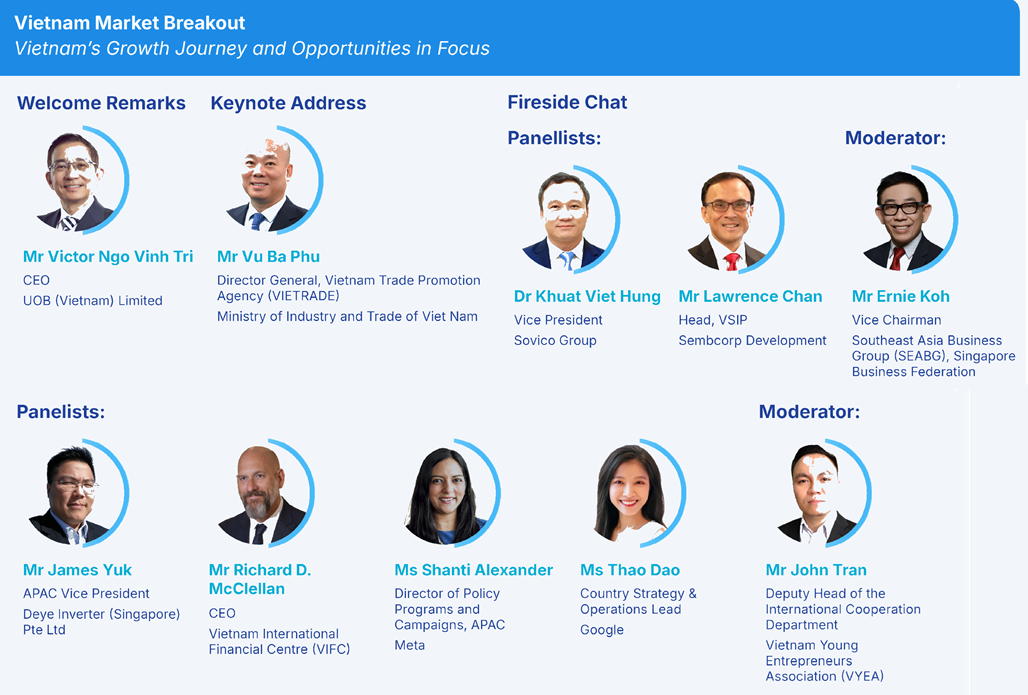
Invited panelists - which included Mr. John Tran, Deputy Head of International Cooperation Department of Vietnam Young Entrepreneurs Association and Vice Chairman of CACCI YEGAP, noted that Vietnam has demonstrated remarkable resilience, emerging as a hub for manufacturing, technology, and exports despite global turbulence and domestic adjustments. With trade tensions, regulatory reforms, and leadership transitions starting to stabilise, the explored what the next phase of growth may look like.
Vietnam’s strong economic momentum is being driven by rapid digital and AI adoption, transformative infrastructure investments, a thriving digital economy, and close public-private collaboration that is strengthening innovation, connectivity, and long-term competitiveness.
The participants examined the sectors poised to drive Vietnam’s future — from electronics and textiles to tech-driven industries — and discuss whether structural reforms, domestic stability, and ASEAN integration can sustain investor confidence in a post-turbulence environment. The conversation will also consider potential vulnerabilities, including exposure to global trade shifts and regional geopolitical pressures, offering a forward-looking view of Vietnam as both an investment destination and a strategic anchor within ASEAN.