CACCI joins UN ECOSOC's Political Forum on Sustainable Development on 7-15 July in New York
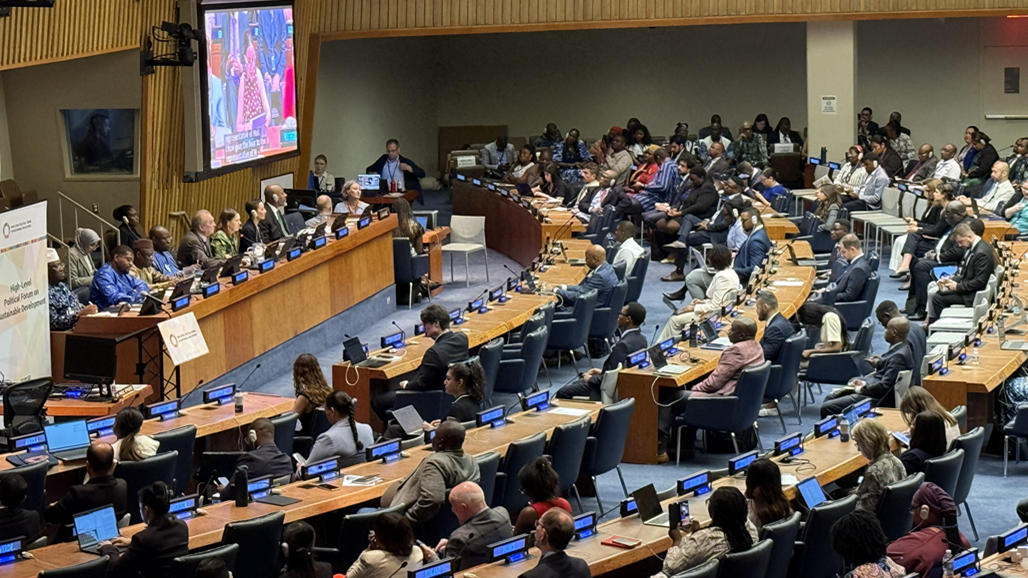
The Confederation of Asia-Pacific Chambers of Commerce and Industry (CACCI) participated in the 2026 High-Level Political Forum on Sustainable Development (HLPF) in New York, reaffirming its dedication to effective multilateralism and commitment to sustainable development. At the Forum, held under the auspices of the Economic and Social Council (ECOSOC)—where CACCI maintains consultative roster status—the delegation was represented by Senior Officer Ms. Wenju Liao.
Centered on the theme "Transformative, equitable, innovative and coordinated actions for the 2030 Agenda for Sustainable Development and its Sustainable Development Goals for a sustainable future for all," the Forum convened ministers, UN representatives, civil society, and the private sector to address the critical final years of the 2030 Agenda.
Discussions focused on the five following SDGs:
- SDG 6 - Ensure availability and sustainable management of water and sanitation for all
- SDG 7 - Ensure access to affordable, reliable, sustainable and modern energy for all
- SDG 9 - Build resilient infrastructure, promote inclusive and sustainable industrialization and foster innovation
- SDG 11 - Make cities and human settlements inclusive, safe, resilient and sustainable
- SDG 17 - Strengthen the means of implementation and revitalize the Global Partnership for Sustainable Development
Participants widely recognised that with only four years remaining until 2030, incremental progress is insufficient to achieve the targets of the 2030 Agenda. Bridging the gap between commitments and implementation requires robust multi-stakeholder cooperation. Financing emerged as a pressing priority. Delegates acknowledged that achieving the 2030 Agenda demands investment at a scale significantly exceeding public resources. While governments remain central, accelerating progress depends on mobilising greater private sector capital through blended finance, sustainable investment vehicles, innovative financial instruments, and enabling policy frameworks. Fostering investment environments that attract capital while ensuring financial flows support sustainable, inclusive, and resilient outcomes is vital. In this context, businesses were recognised not merely as beneficiaries, but as essential partners in delivering the innovation, financing, and scale needed to accelerate progress toward the SDGs.
During the Forum, Ms. Liao also attended several special events, side events, and Voluntary National Review (VNR) labs, including: 1) Turning Reviews into Action: Scaling Impact through VNRs and Voluntary Local Reviews (VLR); 2) Local and Regional Governments Forum on the 2030 Agenda; 3) Advancing Digital Environmental Sustainability for SDG Implementation: Aligning the Global Digital Compact with the HLPF.
CACCI remains committed to advancing the SDGs by empowering the Asia-Pacific business community to build sustainable, resilient, and inclusive economies. Moving forward, CACCI will further strengthen its role as a bridge between the regional business community and international organizations, leveraging its ECOSOC consultative status to increase participation and visibility across UN forums while deepening cooperation with civil society to address global sustainability issues.
Daily Proceedings & Key Sessions
10 July, 2026
I. 2026 High-Level Political Forum
(A) Strengthening Alliances for SDG Implementation: Stakeholder Engagement for the 2030 Agenda:
The July 10 session focused on the critical need to accelerate SDG implementation through enhanced stakeholder engagement. ECOSOC President Lok Bahadur Thapa and delegates emphasised that meaningful inclusion requires building stakeholder capacity, shifting Member State perceptions away from viewing participation as a zero sum game, and creating dedicated institutional space within the UN system.
Representatives from major groups and other stakeholders advocated for a transition from passive consultation toward active cocreation in decision-making processes. Emphasis was placed on protecting advocates and securing adequate funding for civil society to prevent unintentional exclusion.
(B) Stakeholder Engagement in VNR Processes (VNR Lab):
The United Nations Foundation, the Major Groups and Other Stakeholders Coordination Mechanism, and the Department of Economic and Social Affairs (DESA) jointly organised a VNR Lab on stakeholder engagement within VNR processes. The event provided a platform to reflect on the evolution of stakeholder engagement amid shrinking civic space, while building momentum toward key milestones, including the 2027 SDG Summit and broader discussions on accountability and participation beyond 2030.
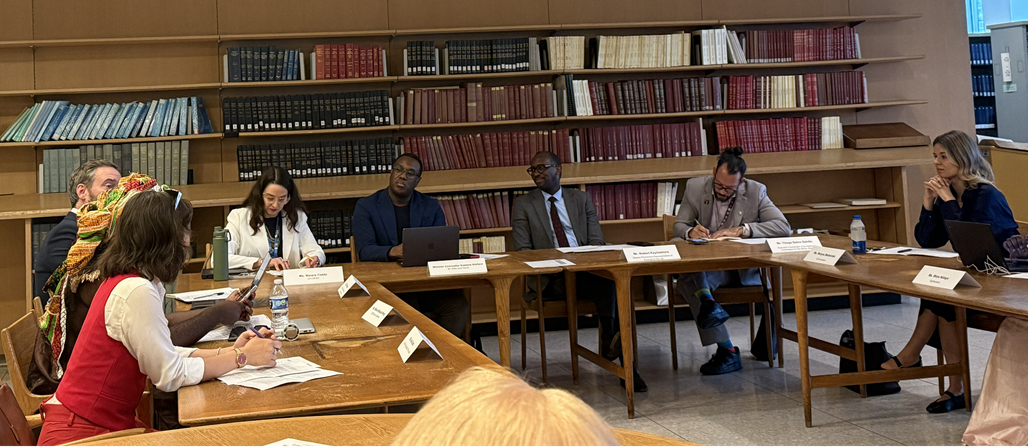
VNR Lab on “Stakeholder Engagement in VNR Processes”
13 July, 2026
II. Ministerial Segment of the 2026 High-Level Political Forum
(A) Ministerial Opening:
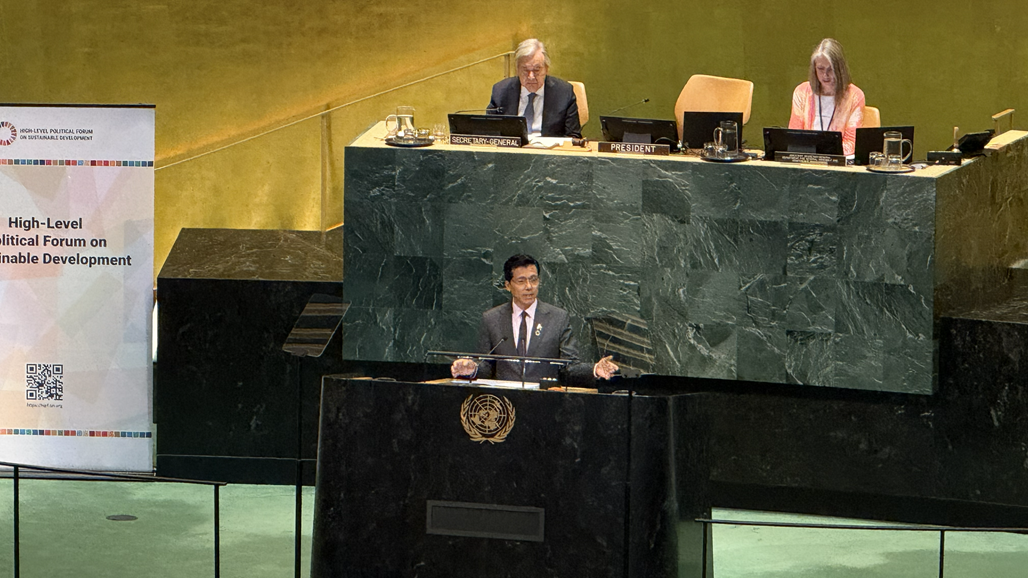
Lok Bahadur Thapa, President, UN Economic and Social Council
The ministerial segment brought together ministers and global leaders to accelerate action on the 2030 Agenda. Guided by the theme, "Transformative, equitable, innovative and coordinated actions for the 2030 Agenda for Sustainable Development and its Sustainable Development Goals for a sustainable future for all," the segment's three-day agenda focused on advancing solutions to leave no one behind.
In his opening statement, ECOSOC President Lok Bahadur Thapa, called upon the international community to ensure that the remaining years until 2030 function as a "delivery cycle" rather than another reporting cycle. He stressed that the SDGs remain the shared blueprint for ending poverty and protecting the planet.
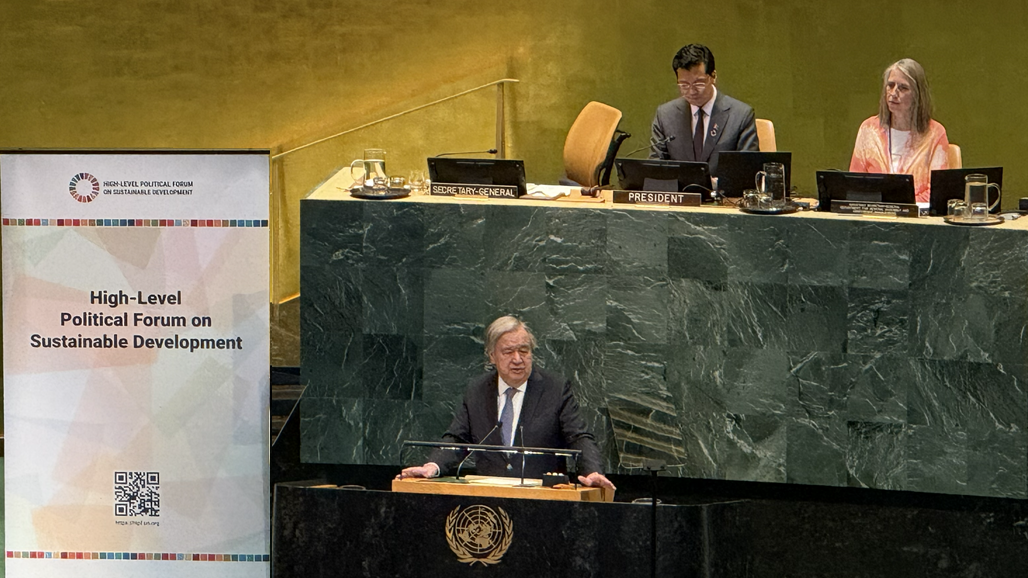
António Guterres, UN Secretary-General
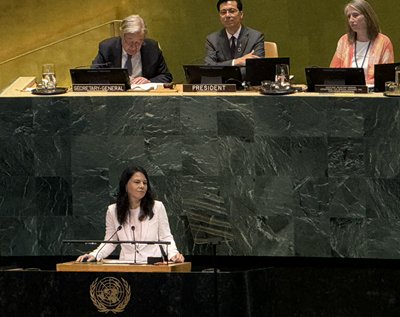
Annalena Baerbock, President, UN General Assembly
UN Secretary-General António Guterres, emphasised the critical need for private investment and collaboration to bridge existing gaps in finance, innovation, and infrastructure, particularly in sustainable water management, energy security, and the transition to renewable energy. Citing the SDG Progress Report, he stated that only 36 per cent of SDG indicators with trend data are on track or making moderate progress. He clarified that this shortfall reflects a lack of effective financing rather than a lack of goodwill, reaffirming the need for an “all hands on deck” approach.
The President of the General Assembly Annalena Baerbock, acknowledged that the SDGs are currently off track, identifying financing as the primary obstacle. Drawing a parallel to the football World Cup, she urged delegates to "never give up at minute 80," stating that "one goal at the right moment can change everything" and underscored that it is up to the global community to play the last four years together.
(B) Turning Reviews into Action: Scaling Impact Through VNRs & VLRs (VNR Lab):
Convened by the five Regional Commissions and the Regional Commissions New York Office, the VNR lab showcased experiences from Kiribati, Mozambique, Egypt, Brazil and Switzerland. Participants highlighted how countries and cities are using VNRs and VLRs to translate global commitments into tangible action.
Participants emphasised that VNRs and VLRs are most effective when they strengthen evidence-based policymaking, connect national and local priorities, improve monitoring, and accountability, and embed the SDGs into development plans and public policy frameworks.
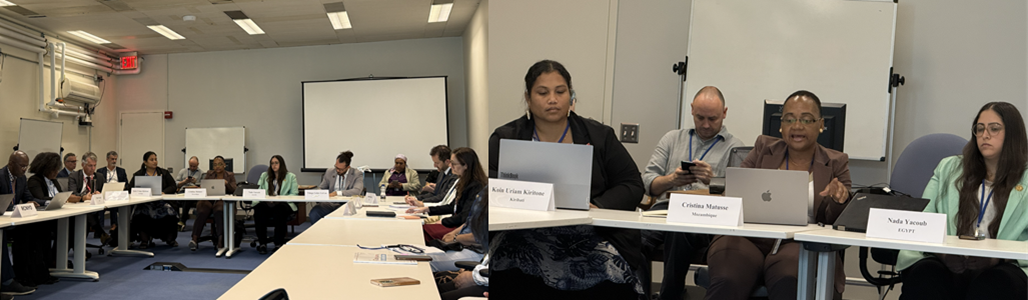
Participants gather for the VNR Lab session, "Turning Reviews into Action: Scaling Impact Through VNRs & VLRs"
14 July, 2026
(C) Messages from the UN Environment Assembly:
President of the Eighth United Nations Environment Assembly (UNEA8) Matthew Samuda, presented recommendations on the SDGs under review, including:
- Promoting integrated water resources management and improved data collection for lake protection (SDG 6)
- Strengthening international collaboration for renewable energy deployment, equal access to energy and just energy transitions (SDG 7)
- Shifting towards circularity, resource efficiency, and sustainable consumption (SDG-9)
- Implementing cross-sectoral action on air pollution and coordination between early warning and disaster risk reduction in cities (SDG 11)
- Enhancing efforts to mobilise means for implementation, including reforming the international financial architectures (SDG 17)
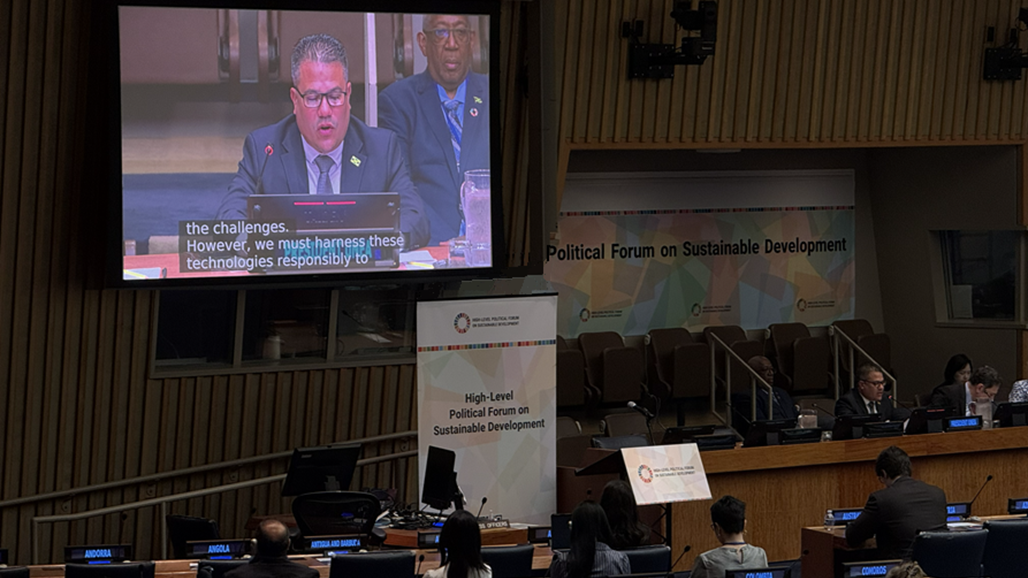
Matthew Samuda, President of the Eighth United Nations Environment Assembly delivers messages from the UN Environment Assembly
(D) Regional Perspectives on SDG:
Speakers from the five UN Regional commissions highlighted regional challenges and implementation pathways for the SDGs. These addressed priorities ranging from climate resilience and energy security in Pacific Small Island Developing States (SIDS), water security, and peace in the Arab region, to policy coherence and localisation in Europe.
Additional regional areas of focus included domestic resource mobilisation and the reforming the international financial architecture. Achieving the 2030 Agenda requires enhanced policy coherence, localized urban empowerment, transboundary cooperation, and modernised international financing architectures.
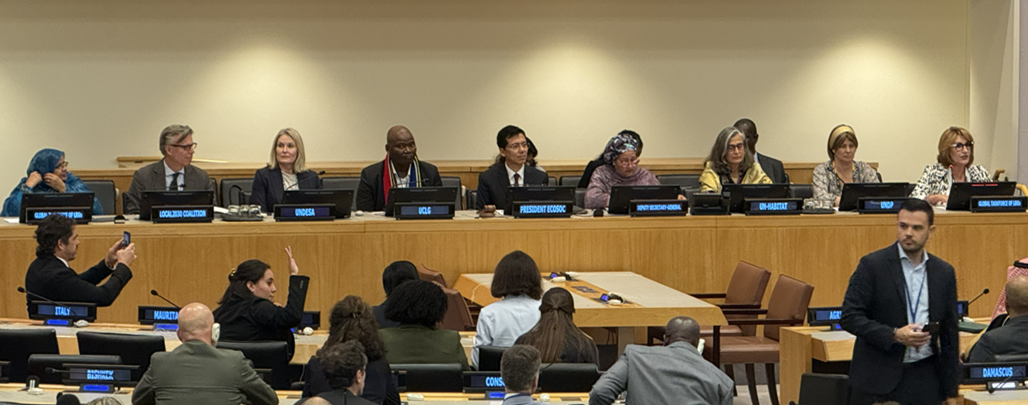
Representatives from UN DESA, the Global Taskforce of Local and Regional Governments, UN-Habitat, UNDP, and the Local2030 Coalition sit in the front row as organizers during the “Local and Regional Governments” forum
(E) Local and Regional Governments Forum on the 2030 Agenda (Special Event):
Over 50 mayors and governors, together with representatives of Member States, stakeholders, UN agencies, civil society and academia, gathered for the forum to bring a critical perspective: coordinated, inclusive, and multilevel territorial governance can only emerge through reinforced and resilient multilateralism.
Opening the session ECOSOC President Lok Bahadur Thapa, stressed that “the next phase of SDG implementation must be defined by delivery–moving from commitments to measurable action, strengthening partnerships across all levels of government, and ensuring solutions reach the communities where they are needed most.” Furthermore, UN Deputy Secretary-General Amina Mohammed and the President of the South African Local Government Association Bheke Stofile, recalled that “SDG 11 is at the core of local mandates,” with local governments leading the development of inclusive settlements through effective public policies.
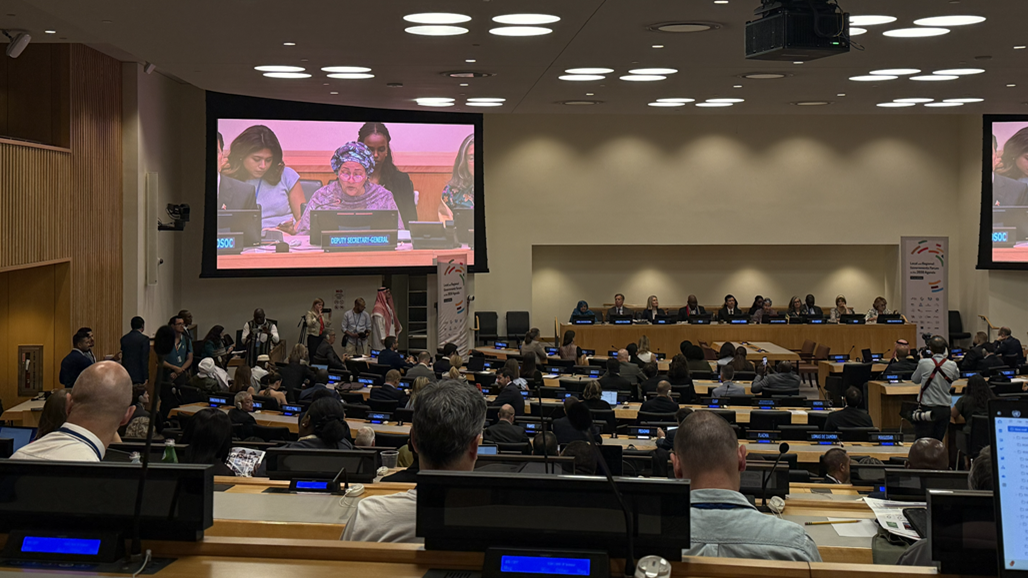
Amina Mohammed, UN Deputy Secretary-General, delivering her remarks at the opening of “Local and Regional Governments Forum on the 2030 Agenda”
The opening remarks were followed by a panel discussion in which speakers argued that achieving the Agenda requires stronger multilevel governance, legal mandates, predictable financing, and systematic UN engagement with local and regional governments.
15 July, 2026
(F) Closing of the HLPF:
The HLPF concluded with the adoption of a ministerial declaration calling for “transformative, equitable, innovative and coordinated” action to accelerate the implementation of the 2030 Agenda for Sustainable Development and its 17 SDGs.
While the declaration was ultimately adopted by consensus, several countries registered reservations on specific sections, including peace and security, climate-resilient infrastructure, and the international debt architecture.
Following the adoption of the Declaration, Assistant Secretary-General for Economic Development Navid Hanif warned that progress toward the SDGs remains insufficient. Noting that only 36 per cent of the goals are currently on track or achieving moderate progress, he stressed that stronger political leadership, investment and partnerships are needed.
“Progress on the SDGs is possible, but not automatic,” Hanif stated. “The SDGs are not beyond reach, but they are beyond business as usual.”
Underscoring the need for integrated policies and stronger international cooperation―and emphasizing that advancement on one goal often depends on progress across many others― ECOSOC President Lok Bahadur Thapa brought the 2026 session of the HLPF 2026 to a close.
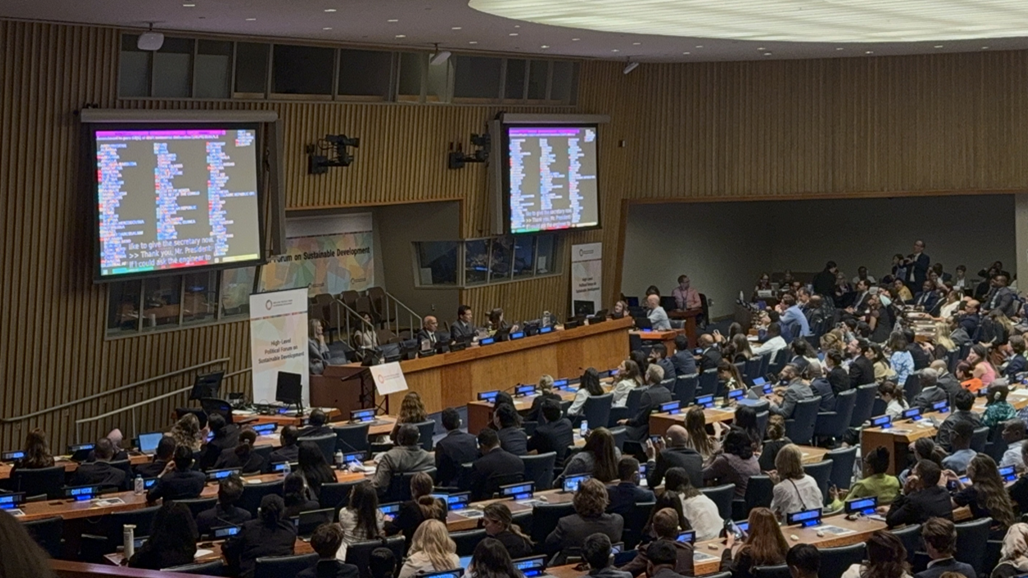
Member States vote on the adoption of the Ministerial Declaration
15-16 July, 2026
III. General Debate
The ministerial segment’s general debate convened with over 60 ministers and high-level representatives of Member States, as well as numerous representatives of regional groups, civil society, and the private sector delivering statements.
Many reaffirmed their commitment to the 2030 Agenda and to multilateralism, emphasizing that no government can achieve sustainable development alone. Delegates acknowledged that conflict, climate disasters, declining official development assistance finance, and price shocks have reversed hard-won gains.
A prominent theme was how conflict disrupts sustainable development, both directly through destruction and indirectly through economic disturbances, exemplified by recent fuel price surges resulting from the closure of the Strait of Hormuz.
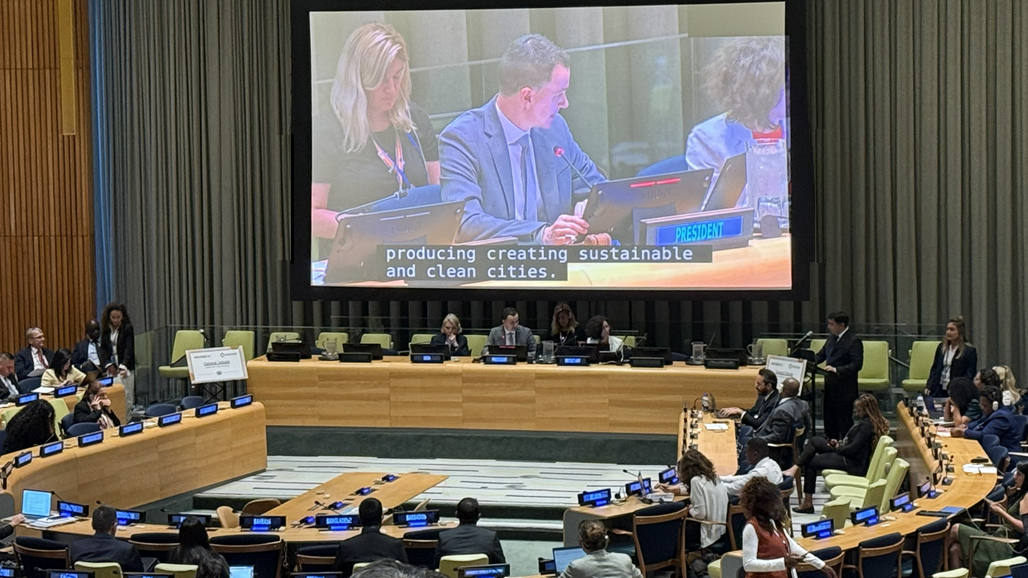
Member States present their actions to achieve the SDGs by 2030 during the general debate of the High-Level Segment of ECOSOC
IV. Voluntary National Reviews
Voluntary National Reviews (VNRs) serve as an established, key mechanism for countries to assess national progress on the implementation of the SDGs.
This year, 36 countries presented VNRs detailing implementation of the 2030 Agenda. Financing remained a prominent theme across the presentations, as did the active participation of stakeholders in both the drafting of the VNRs and the overall execution of the SDGs. Reviews indicated that developing countries and SIDS are increasingly mobilizing domestic resources, driven by augmented tax revenues, with numerous nations reportedly aiming to achieve the recommended benchmark of 15 per cent of GDP. These fiscal measures are often complemented by the establishment of national development banks or sovereign wealth funds, signaling an evolving fiscal landscape and highlighting emerging institutional partnership opportunities for the private sector.
16 July, 2026
V. High-Level Segment of ECOSOC
A. Introduction of the Secretary-General’s reports on the theme of HLPF and ECOSOC, and on long-term impact of current trends on the realisation of the SDGs Introduction of the report of the Committee on Development Policy:
UN DESA Assistant Secretary-General Navid Hanif, introduced UN reports demonstrating that coordinated action and bridging the digital divide can lead to progress on the SDGs. He urged countries to rapidly implement the Sevilla Commitment to close the SDG financing gap.
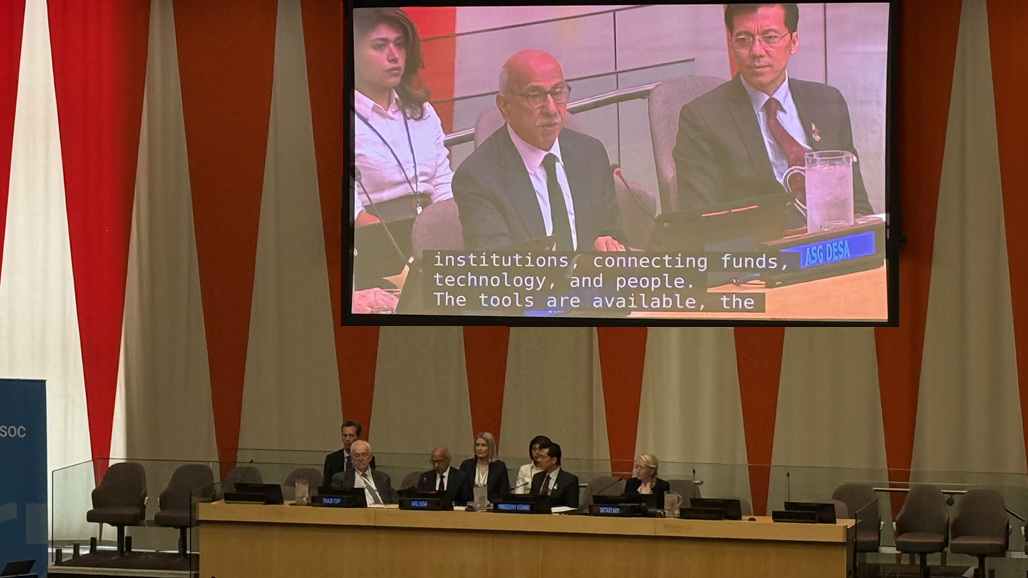
Navid Hanif, UN DESA Assistant Secretary-General
UN Committee for Development Policy Chair José Antonio Ocampo, outlined a three-pronged approach for shaping a credible post-2030 framework centered on rebuilding inclusive multilateralism, advancing regional cooperation, and strengthening national ownership while prioritising systemic change and multiplier effects over encyclopedic targets.
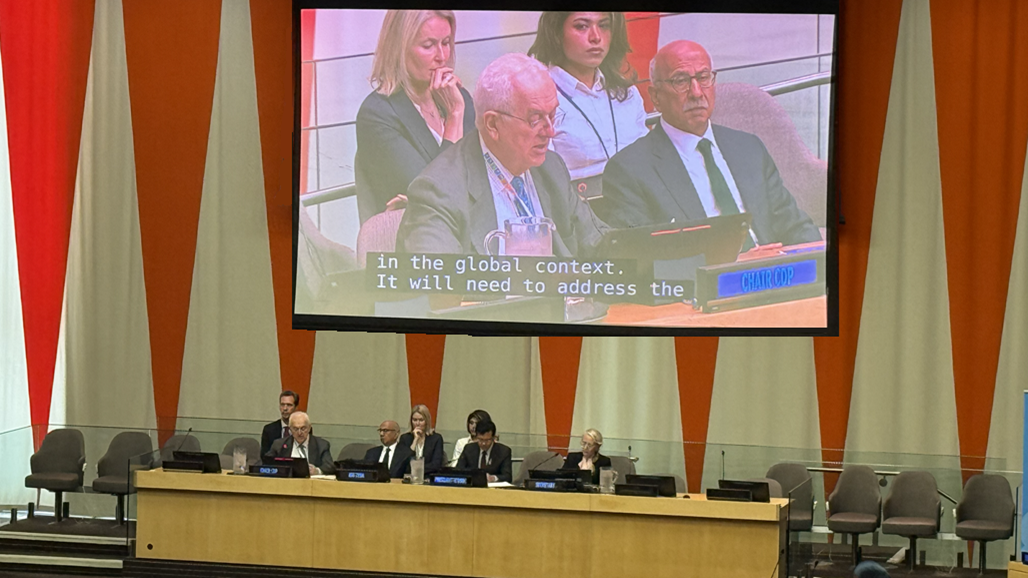
José Antonio Ocampo, UN Committee for Development Policy Chair
B. Advancing Digital Environmental Sustainability for SDG Implementation: Aligning the Global Digital Compact with the HLPF (On-site Event):
Digital technologies serve as powerful accelerators for the 2030 Agenda, yet their growing environmental resource consumption presents a fundamental paradox. Addressing this duality, this on-site event—co-organised by the International Science Council and the Coalition for Digital Environmental Sustainability—explored the environmental sustainability of digital development through three interconnected priorities:
- Evaluating the impacts of AI and digital public infrastructure on the SDGs under review (Goals 6, 7, 9, 11 and 16), with an emphasis on mitigating escalating energy, water and material consumption.
- Operationalising the mandate of the Global Digital Compact to ensure that innovations advance sustainable development processes while addressing their environmental footprint across energy, water and urban systems.
- Strengthening the digital perspective in future frameworks to inform the forthcoming Global Sustainable Development Report and the 2027 SDG Summit.
C. Way forward to 2030:
Reflecting on the first 11 years of the SDGs, UN Deputy Secretary-General Amina J. Mohammed noted that while progress has been tested by crises, these challenges have driven systemic resilience.
Building a resilient post-2030 framework requires accelerating implementation, leveraging emerging technologies, and reforming the global financial architecture. She stated, “the foundations of this past decade were hard-won. The next five years are for delivering on the promise of the SDGs and building the foundations of the future.”
The panel explored the impacts of the current complex policy environment and overlapping pressures on the achievement of SDGs. Furthermore, it examined how the UN system, together with international financial institutions and other partners, can strengthen multilateralism and international cooperation to support transformative action to advance sustainable development.
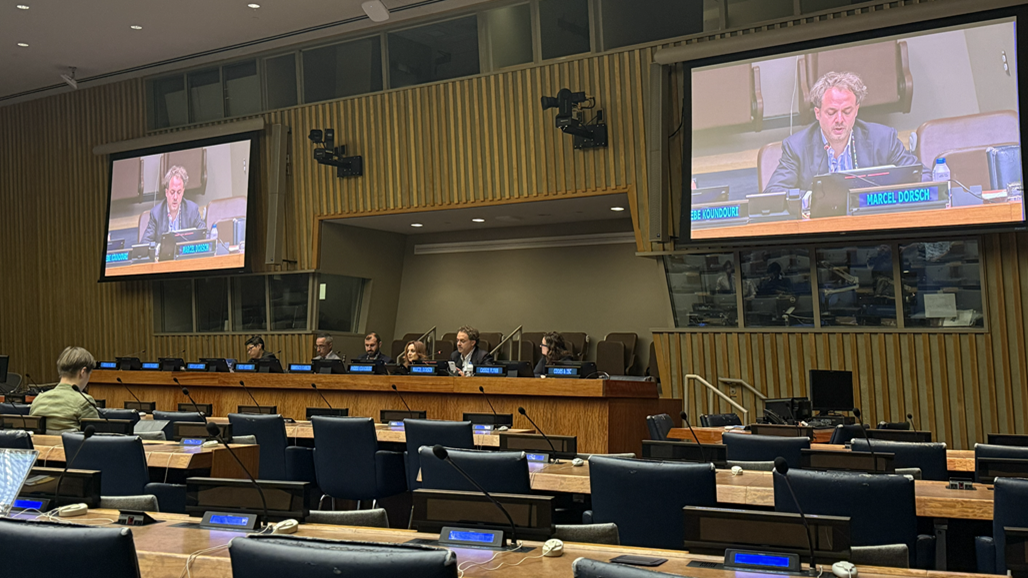
HLPF On-Site Event “Advancing Digital Environmental Sustainability for SDG Implementation: Aligning the Global Digital Compact with the HLPF”
D. Transformation From the Ground Up: Acting at Local Level:
Organised by United Cities and Local Governments and the Global Taskforce of Local and Regional Governments, the session convened a cross section of local and regional governments and other stakeholders to highlight how grassroots action drives global progress in realising the SDGs.
With progress toward the SDGs remaining insufficient, the session emphasised the urgent need for whole-of-government and whole-of society approaches. Local and regional governments, responsible for over 65 per cent of SDG targets, play a pivotal role in implementation.
Scaling SDG efforts requires critical enabling conditions, including supportive territorial planning frameworks, adequate subnational financing, and accessible localised data.
E. Adoption of the Ministerial Declaration Conclusion of the High-Level Segment:
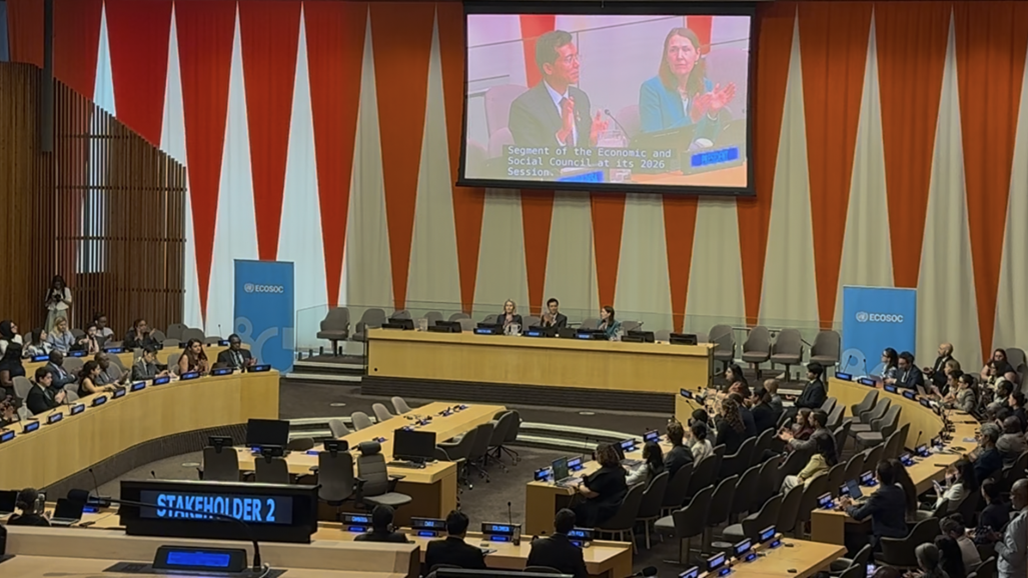
Lok Bahadur Thapa, ECOSOC President, concludes the High-Level Segment
Concluding the High-Level Segment, ECOSOC President Lok Bahadur Thapa reminded delegates that multilateralism succeeds when countries compromise and follow commitments with tangible action.
The Ministerial Declaration reaffirmed the commitment of UN Member States to the 2030 Agenda while acknowledging that progress on the SDGs is under pressure from widening inequalities, financing gaps, conflict, climate change, biodiversity loss, debt burdens, food and energy insecurity, and weakening trust in multilateral cooperation. It called for urgent, coordinated, and inclusive action to accelerate implementation, including through strengthened multilateralism, scaled-up finance, digital and technological cooperation, gender equality, and support for developing countries.