CACCI President leads successful visit to Singapore on 29-31 July 2026
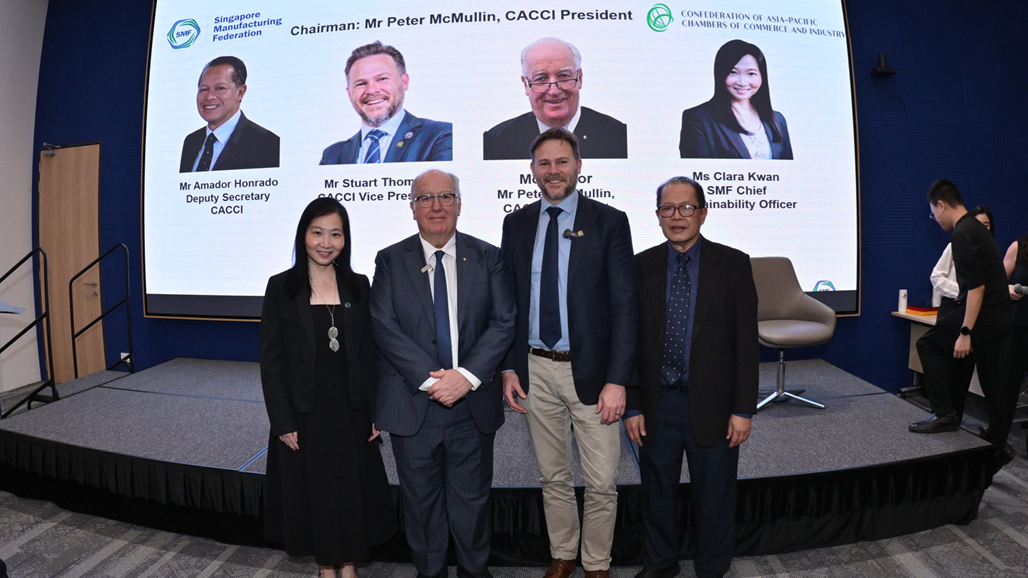
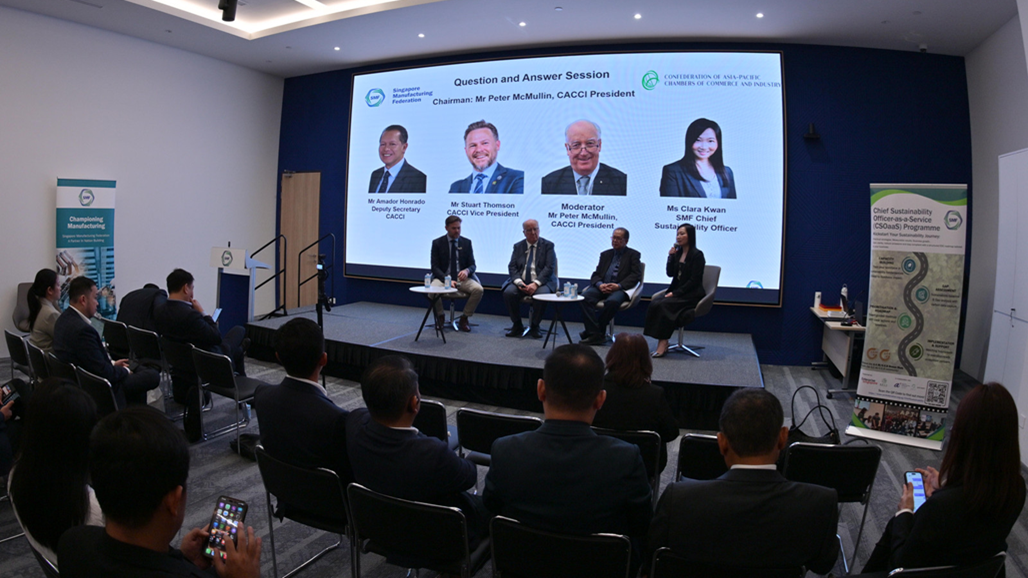
CACCI President Mr. Peter McMullin AM and representatives from various CACCI Primary Members visited Singapore to meet with officers and Council Members of the Singapore Manufacturing Federation (SMF) on the morning of July 29. A meeting between key CACCI officers and the Senior Minister of State (SMS) for the Ministry of Sustainability and Environment of Singapore was also organized by SMF in the afternoon of that day, while the rest of the delegation went on for a site visit.
The Singapore delegation was organized under the Presidential Visit Program of CACCI. The one-day program provided the delegation the opportunity to strengthen ties between CACCI and SMF members as well as with relevant government officials and local businessmen of Singapore, and to seek their support for the Confederation and its activities. During the meetings, Mr. McMullin and members of his delegation introduced CACCI, elaborating on the Confederation’s objectives and what it does to encourage cooperation among businessmen in the region. They also exchanged views on the local business conditions; areas of opportunities for business, trade and investment; and policies set in place by the Singapore government to attract foreign investors.
The CACCI delegation was composed mostly of chamber executives and businessmen from eight CACCI member countries looking at possible business and investment opportunities or considering expansion of their existing businesses in Singapore, and to invite them to consider their respective countries as an investment destination for the Singapore business sector.
Highlights of the Visit
The Singapore Visit was organized by SMF as a Roundtable Conference under the theme of “Unlocking Asia Pacific Market Access”.
Welcome Speech by SMF Vice President
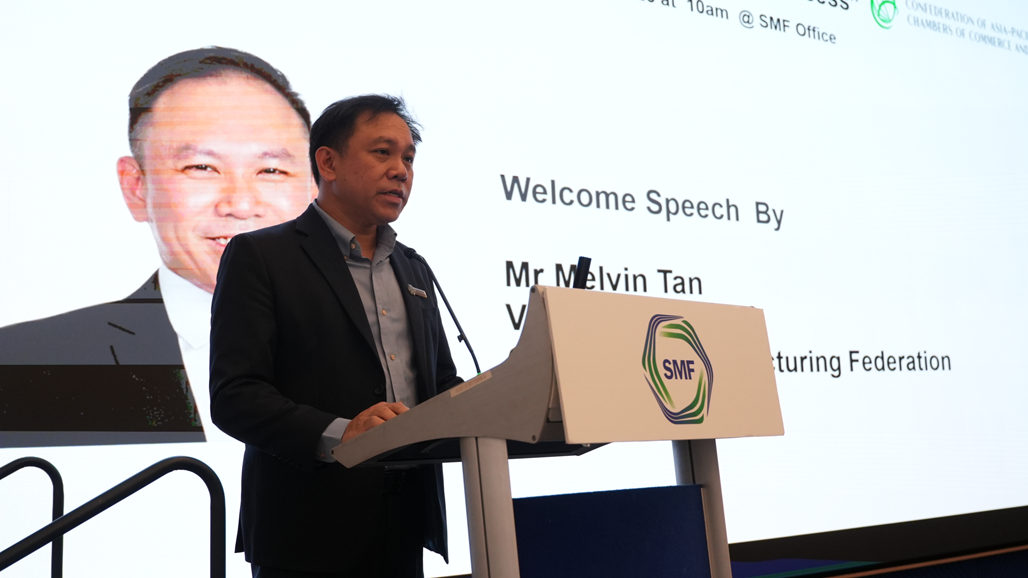
In his Welcome Remarks, SMF Vice President Mr. Melvin Tan said that Singapore manufacturers have had a strong year so far. Non-oil domestic exports grew 18.6% in the first half of 2026, with electronics up over 100% in June alone — driven by AI demand.
He pointed out, however, that manufacturers in Singapore still face real pressure — Middle East-driven supply disruptions, shifting US tariffs, rising costs, tightening ESG rules. This is exactly what SMF and CACCI have been working on together. Sustainability reporting is still a new and fast-moving space across the region, with standards evolving differently in each market — which is a lot for any single SME to navigate alone.
That's why the Green Alliance built a shared certification system: a tiered Bronze, Silver, and Gold framework that assesses companies across environmental, social, and governance criteria, and recognises existing certifications like Green Mark and ISO standards rather than asking businesses to start from zero. As SMF's Chairman of the Sustainability Committee, this is work I've been directly involved in — and it's exactly why this partnership is meaningful. Mr. Tan noted that the Conference topics matter directly to SMF’s members. Market trends matter because our growth this year has come from exports — manufacturing accelerated in the second quarter, driven by AI-related electronics demand.
ESG navigation matters because MNCs here have already started requiring their suppliers to meet sustainability standards, and SMEs that can't keep up risk losing that business. And regional entrepreneurship matters because our members are already looking beyond Singapore — SMF has been active in the Johor-Singapore Special Economic Zone and the Batam-Bintan-Karimun corridor, helping its manufacturers find production and partnership options nearby. “This isn't about leaving Singapore. It's about giving members more options, at a time when relying on one market carries real risk,” Mr. Tan pointed out.
Opening Speech by CACCI President
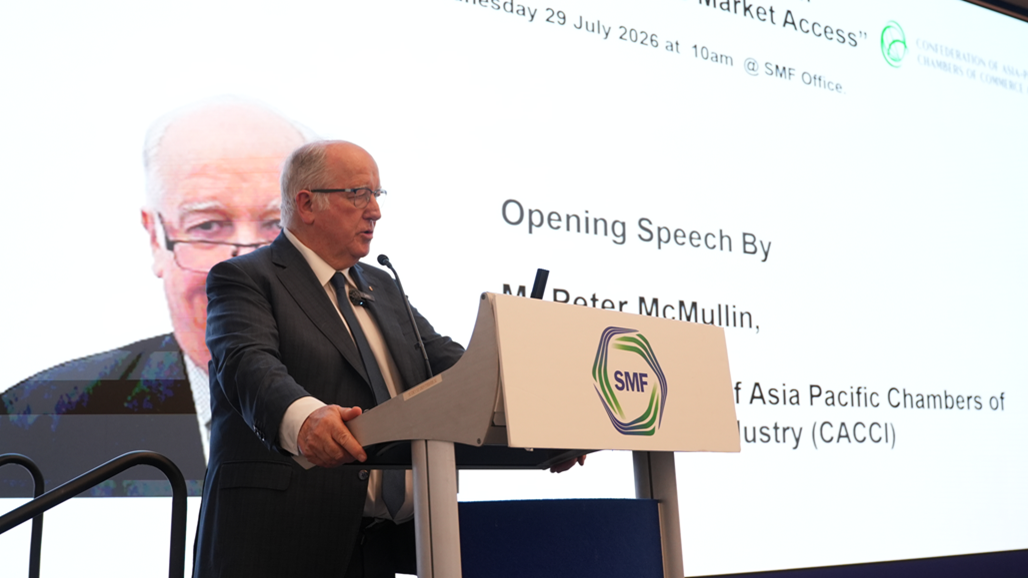
CACCI President Mr. Peter McMullin AM in his Opening Speech noted that amidst the challenges in the global market environment – both geopolitical and economic – the Asia-Pacific region is expected to remain the principal engine of global economic growth throughout the medium term. is expected to make the largest contribution to global growth, supported by resilient domestic demand, expanding manufacturing capacity, rapid digital transformation, and continued infrastructure investment.
Against this backdrop, President McMullin pointed out that CACCI member economies are well positioned to benefit from the region's economic dynamism. The economic diversity of its membership strengthens the resilience of the CACCI network and creates complementary opportunities for trade, investment, and business collaboration across the region.
Mr. McMullin also cited the SET platform of his CACCI Presidency, which he explained to be a strategic policy agenda focused on Sustainability, Entrepreneurship, and Trade to help regional businesses get "SET" for the future. He elaborated on the core Focus Areas of the SET Agenda to include the following: (a) Sustainability, which focuses on helping small and medium-sized enterprises (SMEs) reduce carbon footprints and transition to low-carbon economies through practical frameworks; (b) Entrepreneurship, which supports grassroots innovation and youth-led economic growth through networks like the Young Entrepreneurs Group Asia Pacific (YEGAP); and (c) Trade, which aims to enhance regional commercial cooperation, partnership building, and market access across Asia and Oceania.
The Welcome and Opening Remarks by Mr. Tan and Mr. McMullin were followed by three presentations:
Presentation on Asia-Pacific Business Outlook
Mr. Amador Honrado, CACCI Deputy Director-General, made a presentation on “Asia-Pacific Business Outlook” in which he outlined market trends, growth sectors, and trade opportunities across CACCI member economies.

Introduction on CACCI and Its Activities
However, before he made his presentation on “Asia-Pacific Business Outlook”, Mr. Honrado briefly introduced CACCI and its activities, highlighting the following:
(1) CACCI is a regional body of chambers of commerce and industry, business associations and business enterprises in Asia-Pacific, serving as a forum for promoting the vital role of businessmen in the region, increasing business interaction, and enhancing regional economic growth.
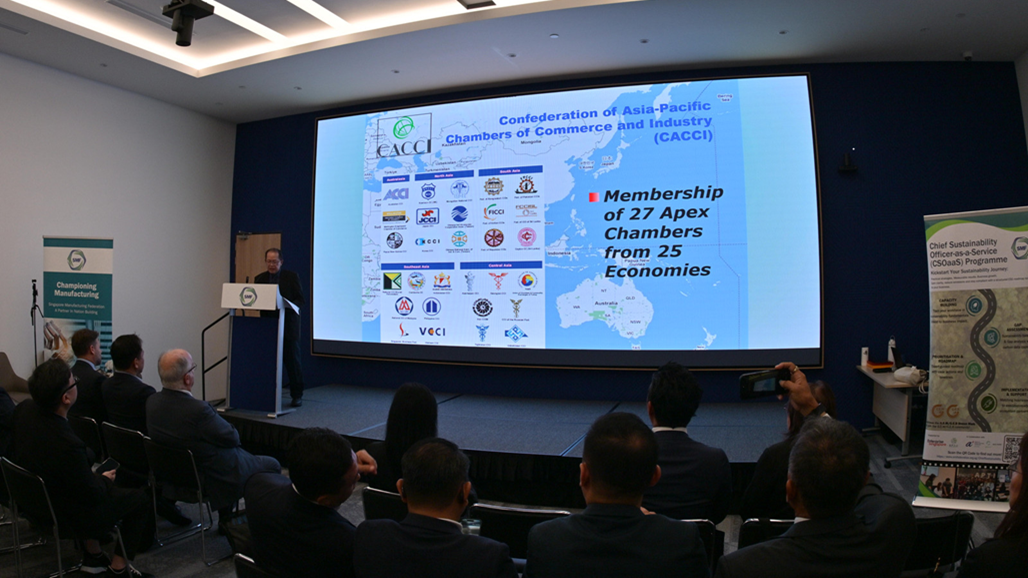
(2) Since its establishment in 1966, CACCI has grown into a network of 27 national chambers from 25 Asian countries, pointing out that, when effectively mobilized, these members can give substance to CACCI’s common commitment to economic development.
(3) To help members meet the challenges of globalization and at the same time take advantage of the opportunities it offers, chambers of commerce must provide services that will enable their constituencies to reach out into the global market. These activities should be focused on a number of areas:
- CACCI recognizes the importance of business networking to encourage greater interaction among individual businessmen in CACCI member countries and outside the region
- CACCI sees the need for chambers of commerce to play a more active role in regional cooperation efforts by establishing an effective channel of communication with members of ABAC, ASEAN BAC, SAARC-CCI.
- CACCI recognizes the need to establish stronger ties and conduct dialogues with other regional and internation business organizations such as the International Chambers of Commerce and the Eurochambres
- CACCI believes in bringing SMEs into the mainstream of economic development by providing them support and allowing them to be competitive both domestically and internationally.
- CACCI recognizes the importance of encouraging the exchange of trade delegations, participation in trade fairs, the exchange of trade data information, and performing business inquiry services and trade matching activities.
- Chambers should encourage their constituencies to invest on training programs that address the emerging skills requirements and on sound practices of doing international business, trade and investments.
- Chambers must encourage the development of schemes to intensify firm level cooperation in technology transfer and increase technology-based investments.
- CACCI maintains that chambers must serve as spokesmen for the business communities by joining forces in formulating their stand on policy issues to help establish a healthy business environment and create better business opportunities.
Asia-Pacific Business Outlook
Before presenting his report on “Asia-Pacific Business Outlook”, Mr. Honrado first attributed its preparation to CACCI Director-General Dr. Darson Chiu. He then proceeded to highlight the following points in the report:
Three structural forces expected to shape the regional economy during 2026–2031
- Continued diversification of global supply chains and manufacturing across Asia;
- Accelerating investment in artificial intelligence, semiconductors, digital infrastructure, and advanced manufacturing; and
- Continued expansion of regional trade and cross-border investment despite an increasingly complex geopolitical environment.
Regional Assessment
Northeast Asia
Northeast Asia remains the region's center for technological innovation and advanced manufacturing. Although Japan, Korea, and Taiwan are expected to record more moderate economic growth than emerging Asia, they continue to benefit from world-class industrial capabilities, sophisticated financial markets, and high-value exports. These economies are expected to remain major sources of technology, investment, and innovation across the Asia-Pacific.
Taiwan is projected to experience particularly strong growth in 2026, supported by sustained global demand for semiconductors and AI-related products. As capacity expansion gradually normalizes, growth is expected to moderate over the following years while remaining above that of many advanced economies.
Southeast Asia
Southeast Asia is expected to remain one of the world's fastest-growing economic regions, benefiting from favorable demographics, expanding consumer markets, continued manufacturing relocation, and increasing foreign direct investment.
Vietnam is projected to remain the region's growth leader through export-oriented manufacturing and strong FDI inflows. Indonesia continues to benefit from its large domestic market, abundant natural resources, and downstream industrial development. The Philippines is supported by resilient domestic consumption, infrastructure investment, and a growing services sector. Cambodia continues to benefit from tourism recovery, construction, and export-oriented manufacturing, while Singapore maintains its role as Asia’s leading financial and business hub despite more moderate GDP growth.
South Asia
South Asia is expected to remain an important source of long-term regional growth, led by India's expanding domestic market, rapid digitalization, infrastructure investment, and manufacturing development.
Bangladesh is projected to recover steadily following recent macroeconomic adjustments. Pakistan's outlook remains positive but depends on continued structural reforms and improved external financing conditions. Nepal is expected to maintain stable growth supported by tourism, remittances, and domestic investment, while Sri Lanka continues its gradual post-crisis recovery under ongoing economic reforms.
Central Asia and the Caucasus
Central Asia and the Caucasus are becoming increasingly important strategic corridors linking East Asia, South Asia, Europe, and the Middle East. Structural reforms, infrastructure investment, and improving regional connectivity continue to strengthen the investment attractiveness of Uzbekistan, Tajikistan, Azerbaijan, and Georgia. These economies are expected to play a growing role in regional logistics, energy cooperation, and cross-border trade.
Oceania
Australia and New Zealand are expected to maintain steady, moderate economic growth supported by strong institutions, immigration, commodity exports, and competitive services sectors. Although growth rates are lower than those of emerging Asia, both economies continue to provide attractive, stable, and low-risk investment environments for regional businesses.
Business Opportunities
The medium-term outlook highlights several sectors that are expected to generate significant business and investment opportunities across CACCI member economies during 2026–2031. These are:
Digital Economy
- Artificial Intelligence (AI),
- Semiconductor Supply Chains,
- Digital Infrastructure, and
- Digital Payments and FinTech.
Green Economy
- Renewable Energy and
- Green Finance.
Infrastructure and Services
- Logistics and Supply Chain Management,
- Infrastructure Development,
- Healthcare,
- Tourism, and
- Smart Manufacturing.
Key Risks
Despite the generally favorable outlook, several structural risks could moderate regional growth during the forecast period. The principal challenges include:
- Escalating geopolitical tensions and strategic competition;
- Rising trade protectionism and supply-chain fragmentation;
- High public debt and fiscal pressures in several economies;
- Population ageing, particularly in advanced Asia;
- Climate-related disruptions and the energy transition;
- Financial market volatility and exchange-rate fluctuations; and
- Slower-than-expected global demand.
The extent to which governments and businesses successfully adapt to these challenges will largely determine the sustainability of regional economic growth.
Implications for CACCI
The evolving regional economic landscape reinforces CACCI's role as the leading platform for promoting private-sector cooperation across the Asia-Pacific. As businesses diversify supply chains, accelerate digital transformation, and seek new investment opportunities, CACCI can play an increasingly important role in facilitating regional business partnerships and economic integration.
To support its members, CACCI should prioritize:
- Expanding business missions to high-growth member economies;
- Promoting investment matchmaking and cross-border partnerships;
- Strengthening SME cooperation and digital trade initiatives;
- Supporting AI, digital economy, and green transition projects;
- Deepening collaboration with regional and international organizations; and
- Enhancing policy dialogue between governments and the private sector.
Conclusion
The medium-term outlook for CACCI member economies remains positive despite an increasingly uncertain global environment. Emerging Asia is expected to continue driving regional growth, while advanced member economies will provide technological leadership, financial stability, and innovation. Together, these complementary strengths position the Asia-Pacific as the world's most dynamic economic region over the coming decade.
Although geopolitical tensions, trade fragmentation, demographic change, climate-related challenges, and financial market volatility remain significant downside risks, the medium-term outlook for most CACCI member economies remains positive. By fostering stronger regional business connectivity, promoting investment partnerships, and supporting innovation-driven growth, CACCI is well positioned to help its members capitalize on emerging opportunities while enhancing the resilience and competitiveness of the Asia-Pacific business community.