CACCI Economic Outlook for 2026-2031
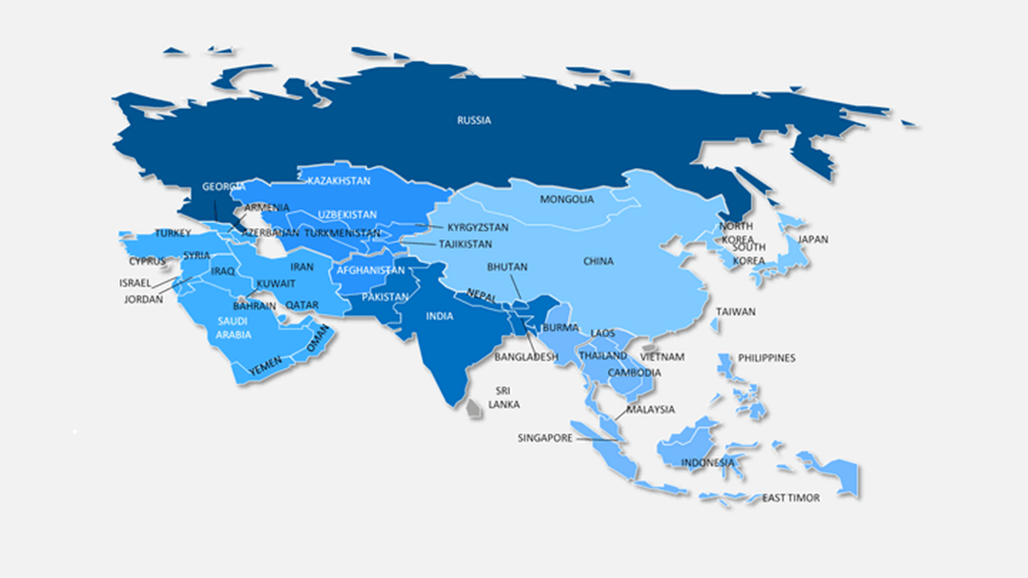
Prepared by the CACCI Secretariat based on S&P Global Market Intelligence
The latest forecasts from S&P Global Market Intelligence indicate that the Asia-Pacific region will remain the principal driver of global economic growth over the medium term. Among CACCI member economies, growth is expected to become increasingly diversified. South and Southeast Asia continue to outperform advanced economies, while mature markets provide stability, technological leadership, and investment opportunities.
Three structural forces are expected to shape the regional economy during 2026-2031:
- Continued supply chain diversification across Asia.
- Rapid investment in artificial intelligence, digital infrastructure, and advanced manufacturing.
- Expansion of regional trade and investment despite increasing geopolitical uncertainty.
Although geopolitical tensions, demographic change, and trade fragmentation remain significant risks, the medium-term outlook for most CACCI member economies remains positive.
Key Findings
(1) Asia remains the world’s fastest-growing economic region
Most CACCI member economies are expected to expand faster than advanced Western economies throughout the forecast period, supported by strong domestic demand, infrastructure investment, manufacturing relocation, and digital transformation.
(2) Emerging Asia continues to outperform
Vietnam, India, Uzbekistan, Cambodia, Indonesia, and the Philippines are expected to remain among the strongest-performing economies within the CACCI network.
(3) Advanced economies provide stability rather than rapid growth
Australia, Japan, New Zealand, Singapore, Korea, and Taiwan are expected to record more moderate but relatively stable growth, supported by technology, services, innovation, and strong institutions.
(4) AI investment is becoming an important growth engine
Taiwan, Korea, Japan, and Singapore are expected to benefit significantly from investment in semiconductors, artificial intelligence, cloud computing, and advanced digital infrastructure.
(5) Geopolitical uncertainty remains the largest downside risk
Trade protectionism, geopolitical tensions, fiscal pressures, climate change, and population ageing continue to present important challenges for the region.
Top Growth Performers
Average Real GDP Growth Forecast (2026–2031)
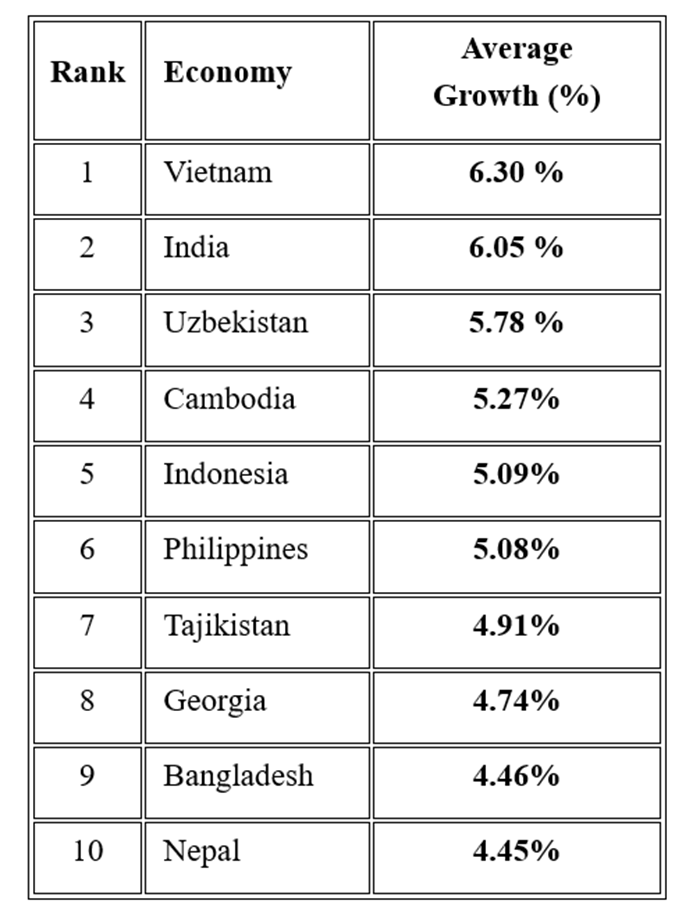
These economies are expected to continue benefiting from strong demographic trends, infrastructure investment, manufacturing expansion, and increasing foreign direct investment.
Regional Assessment
Northeast Asia
Japan, Korea, and Taiwan remain among Asia’s most technologically advanced economies. Although medium-term growth is expected to moderate compared with emerging Asia, these economies continue to benefit from innovation, advanced manufacturing, financial services, and high-value exports.
Taiwan is expected to experience particularly strong growth in 2026 due to continued global demand for semiconductors and AI-related products before gradually returning to a more sustainable pace over the following years.
Southeast Asia
Southeast Asia remains one of the world’s most dynamic economic regions.
Vietnam continues to lead the region through export-oriented manufacturing and sustained foreign investment. Indonesia benefits from its large domestic market and downstream industrial development. The Philippines continues to be supported by domestic consumption, infrastructure development, and services. Singapore remains an important regional financial center despite more moderate GDP growth. Cambodia continues to benefit from tourism recovery, construction, and export-oriented manufacturing.
South Asia
India remains the largest long-term growth engine among CACCI members, supported by digitalization, infrastructure investment, manufacturing, and domestic demand. Bangladesh is expected to recover steadily after recent economic adjustments. Pakistan's outlook remains positive but subject to macroeconomic reforms and external financing conditions. Nepal is expected to maintain stable medium-term growth supported by tourism, remittances, and domestic investment. Sri Lanka continues its post-crisis economic recovery under ongoing structural reforms.
Central Asia and the Caucasus
Uzbekistan, Tajikistan, Azerbaijan, and Georgia continue to benefit from structural reforms, infrastructure development, and increasing regional connectivity.
These economies are becoming increasingly important investment destinations linking East Asia, South Asia, Europe, and the Middle East.
Oceania
Australia and New Zealand are expected to maintain stable growth supported by strong institutions, immigration, commodity exports, and services industries.
Although growth rates remain relatively moderate, both economies continue to provide attractive and low-risk investment environments.
Business Opportunities
The following sectors present the greatest opportunities across CACCI member economies during 2026–2031:
- Artificial Intelligence and Digital Infrastructure,
- Semiconductor Supply Chains,
- Renewable Energy,
- Green Finance,
- Logistics and Supply Chain Management,
- Digital Payments and FinTech,
- Healthcare,
- Tourism,
- Infrastructure, and
- Smart Manufacturing.
Key Risks
The principal risks facing CACCI member economies include:
- Escalating geopolitical tensions,
- Increasing trade protectionism,
- High public debt in several economies,
- Population ageing in advanced Asia,
- Climate-related disruptions,
- Financial market volatility,
- Exchange-rate fluctuations, and
- Slower global demand.
Implications for CACCI
The economic outlook reinforces CACCI’s role as the leading regional platform for promoting private-sector cooperation across the Asia-Pacific.
To capitalize on emerging opportunities, CACCI should consider:
- Expanding business missions to high-growth member economies.
- Strengthening SME cooperation and digital trade initiatives.
- Promoting investment matchmaking among members.
- Supporting AI, digital economy, and green transition initiatives.
- Deepening collaboration with regional and international organizations.
- Enhancing policy dialogue between governments and the private sector.
Conclusion
Despite an increasingly uncertain global environment, the medium-term outlook for CACCI member economies remains encouraging. Emerging Asia is expected to continue driving regional growth, while advanced member economies provide technological leadership, financial stability, and innovation.
The diversity of the CACCI membership remains one of its greatest strengths. By strengthening regional business connectivity and promoting closer economic cooperation, CACCI is well positioned to contribute meaningfully to sustainable growth and shared prosperity throughout the Asia-Pacific region.